


Across badminton racket projects, noise, vibration and emissions eliminate more models than price does, and it is almost never in the enquiry. A badminton racket is selected on duty and then rejected by the site: the sound pressure at one metre exceeds what the boundary allows, the vibration transmitted into the structure is above what the building tolerates, or the exhaust concentration exceeds the permit the plant already holds. Each of the three can be measured before the badminton racket order — sound level meter, accelerometer, the emission data in a type-test report — and each is expensive to correct after installation. The same test applies to any wholesale badminton racket.
On badminton racket orders, the model that meets the duty can still be refused by the neighbours, the structure or the permit.
The guidance is based on the experience of 杭州乐檬进出口有限公司 (www.factoryracket.com), which supplies badminton rackets, shuttlecocks, tennis rackets to clients worldwide.
Before choosing a badminton racket, define the application conditions. These factors determine everything else.
Duty cycle:how often and how hard the badminton racket will work.
Environment: temperature, humidity, dust, corrosion and exposure.
Regulatory condition: the standards that apply in your market.
Interfaces: dimensions, connections and compatibility with existing systems.
Lifetime expectation: the service life you need before replacement.
Maintenance access:how easily the badminton racket can be serviced.
Budget versus total cost: the balance between purchase price and lifetime cost.
Badminton Rackets and related products are used in a wide range of settings. Understanding the demands of each helps match product to purpose.
Clubs And Academies: requires reliable performance and appropriate conformity, with duty cycles that vary by application.
Schools: requires reliable performance and appropriate conformity, with duty cycles that vary by application.
Online Sports Retailers: requires reliable performance and appropriate conformity, with duty cycles that vary by application.
Tournament Organisers: requires reliable performance and appropriate conformity, with duty cycles that vary by application.
Sports Brands: requires reliable performance and appropriate conformity, with duty cycles that vary by application.
In each case the specification should be driven by what the sports brands application demands, not by what happens to be in stock.
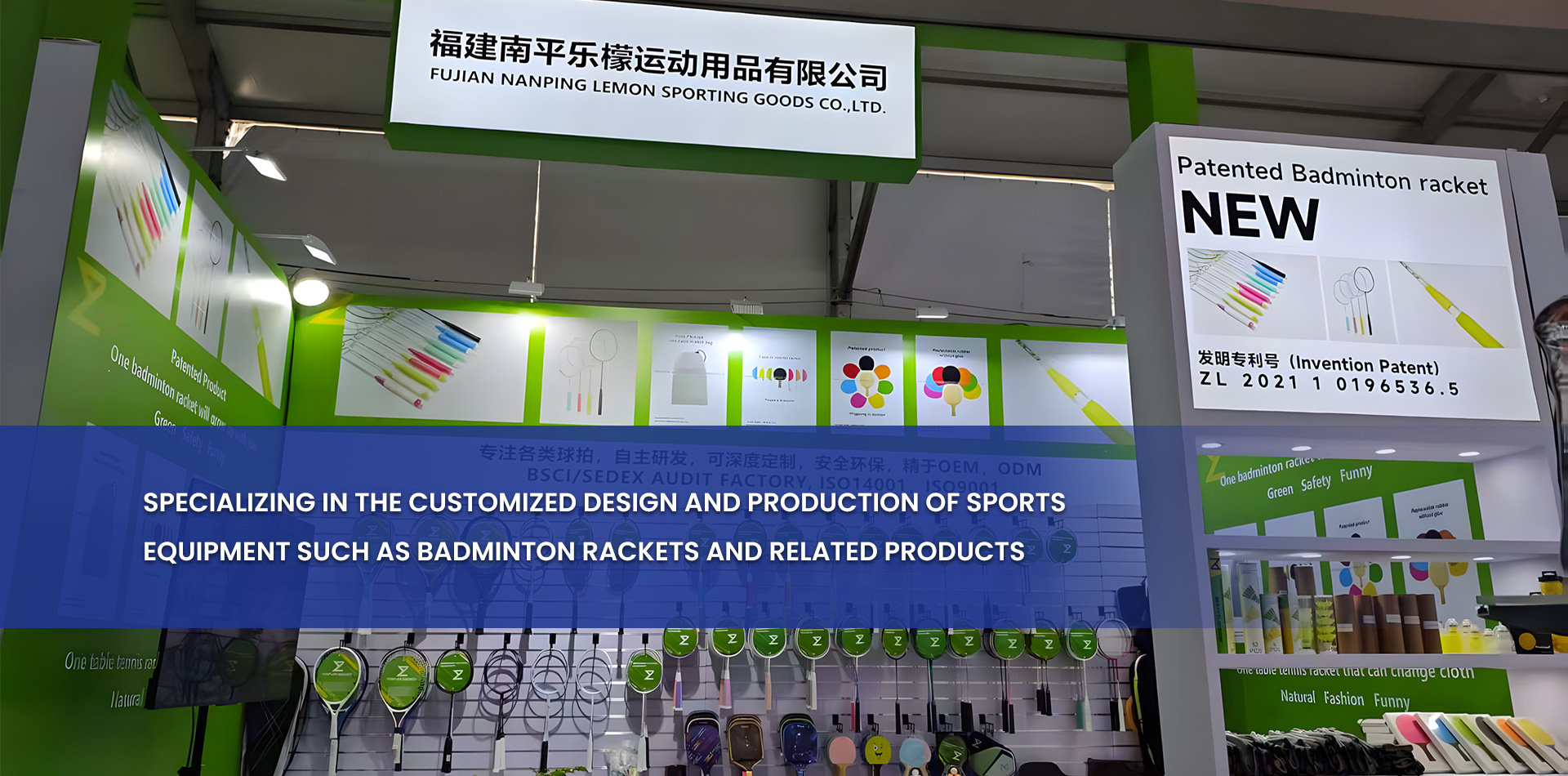
Different applications place different demands on the same category of product. Across badminton racket projects, a configuration suited to light duty will fail quickly under continuous operation, while an over-specified product wastes money.
| Application | Duty Level | Key Condition | Specification Focus |
|---|---|---|---|
| Light duty | Intermittent | Basic reliability | Standard configuration |
| Medium duty | Regular | Consistent performance | Reinforced components |
| Heavy duty | Continuous | Durability and serviceability | Premium materials |
| Critical duty | Continuous, safety-relevant | Redundancy and conformity | Certified, monitored systems |
Ask the provider to recommend a configuration for your specific duty level rather than defaulting to the cheapest option.
In badminton racket supply, the operating environment is often the single biggest driver of product life.
Temperature: extreme heat or cold affects materials and lubricants.
Humidity and moisture: drives corrosion and electrical exposure.
Dust and particulates: accelerates wear and blocks ventilation.
Corrosive atmospheres: requires specific material grades.
Vibration and shock: demands robust mounting and fastening.
Specify the environment explicitly. A badminton racket that performs well in a clean workshop may fail outdoors or in a chemical plant.
A good specification is unambiguous. It states the condition, the conditions, and the acceptance criteria.
State the tournament organisers application and duty cycle.
List the environmental conditions.
Define the performance condition.
Specify the applicable standards.
State the interface and dimensional conditions.
Define the acceptance criteria and documentation.
State the packaging and dispatch condition.
When two vendors quote very different prices, it is usually because they interpreted the badminton racket requirement differently. Precision removes that exposure.
Correct installation protects performance and warranty. Follow the manufacturer's instructions, verify the mounting and connections, and commission the system before full operation.
Require installation documentation and, where relevant, on-site support. A vendor who provides clear commissioning guidance reduces the exposure of premature failure.
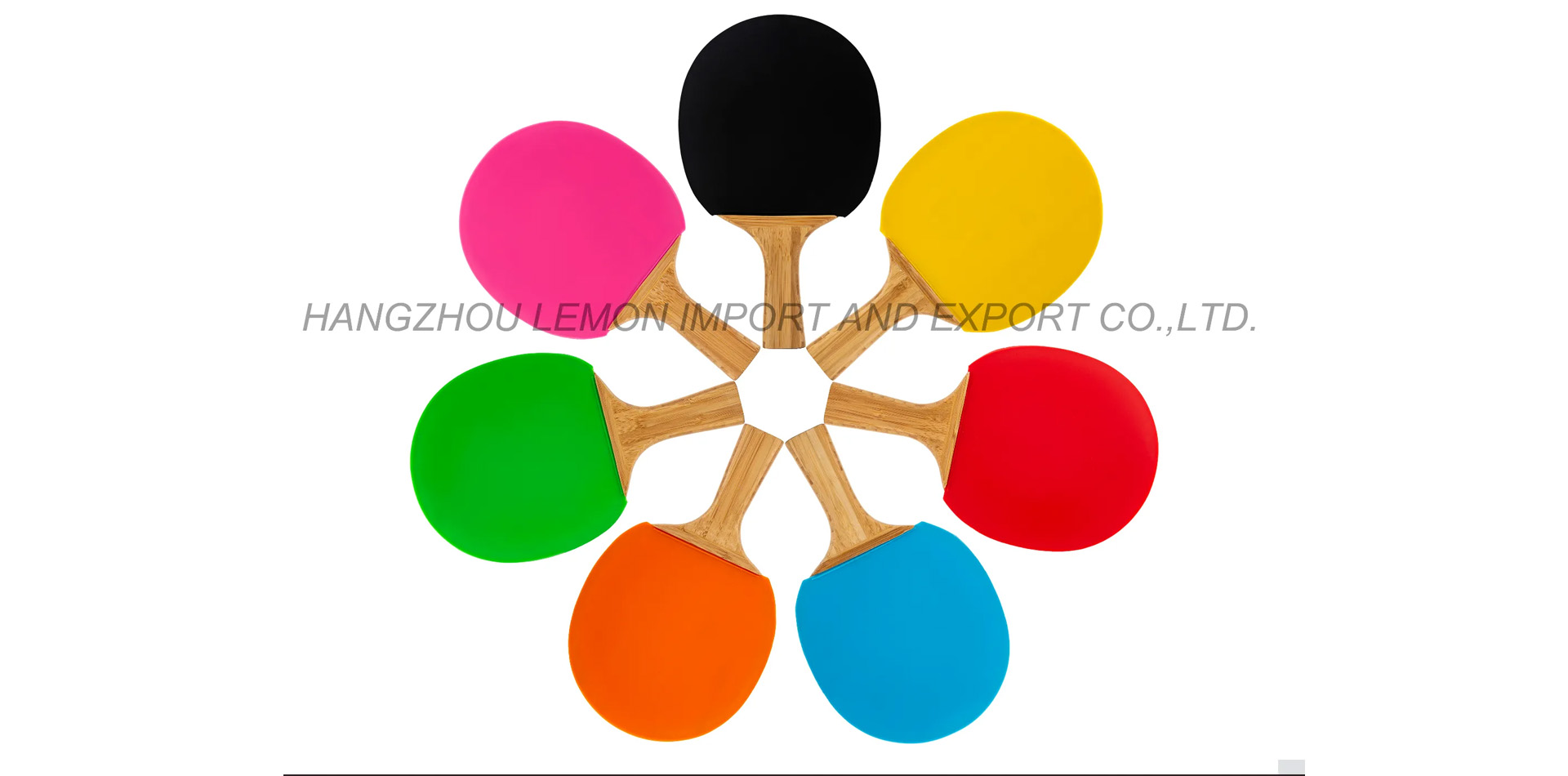
On badminton racket jobs, lifetime cost is driven by maintenance frequency and the availability of spare parts. A badminton racket with a slightly higher purchase price but longer service intervals often delivers a lower total cost.
In badminton and racket sports equipment work, make certain of the recommended maintenance schedule, the availability of consumables and spare parts, and the expected service life under your duty cycle.
This matrix summarises how conditions change across applications and helps you position the badminton racket correctly.
| Application | Typical Duty | Environment | Regulatory Focus | Lifetime Priority |
|---|---|---|---|---|
| Industrial production | Continuous | Indoor, controlled | Safety standards | Uptime |
| Outdoor and field | Intermittent | Variable weather | Environmental standards | Durability |
| Process and utility | Continuous | Varies | Application standards | Reliability |
| Commercial use | Regular | Indoor | Product safety | Cost of ownership |
| Critical systems | Continuous | Controlled | Certified conformity | Redundancy |
Use the matrix to sanity-check a proposed configuration: if the product's rating does not match the duty and environment, it is the wrong choice even if the badminton racket price is attractive.
Different applications invoke different standards. Establish which apply to your use case and market.
BWF Laws of Badminton: confirm applicability to your application and market.
ISO 9001: confirm applicability to your application and market.
CE: confirm applicability to your application and market.
REACH: confirm applicability to your application and market.
BWF approval: request evidence of conformity where required.
ISO 9001:2015: request evidence of conformity where required.
CE: request evidence of conformity where required.
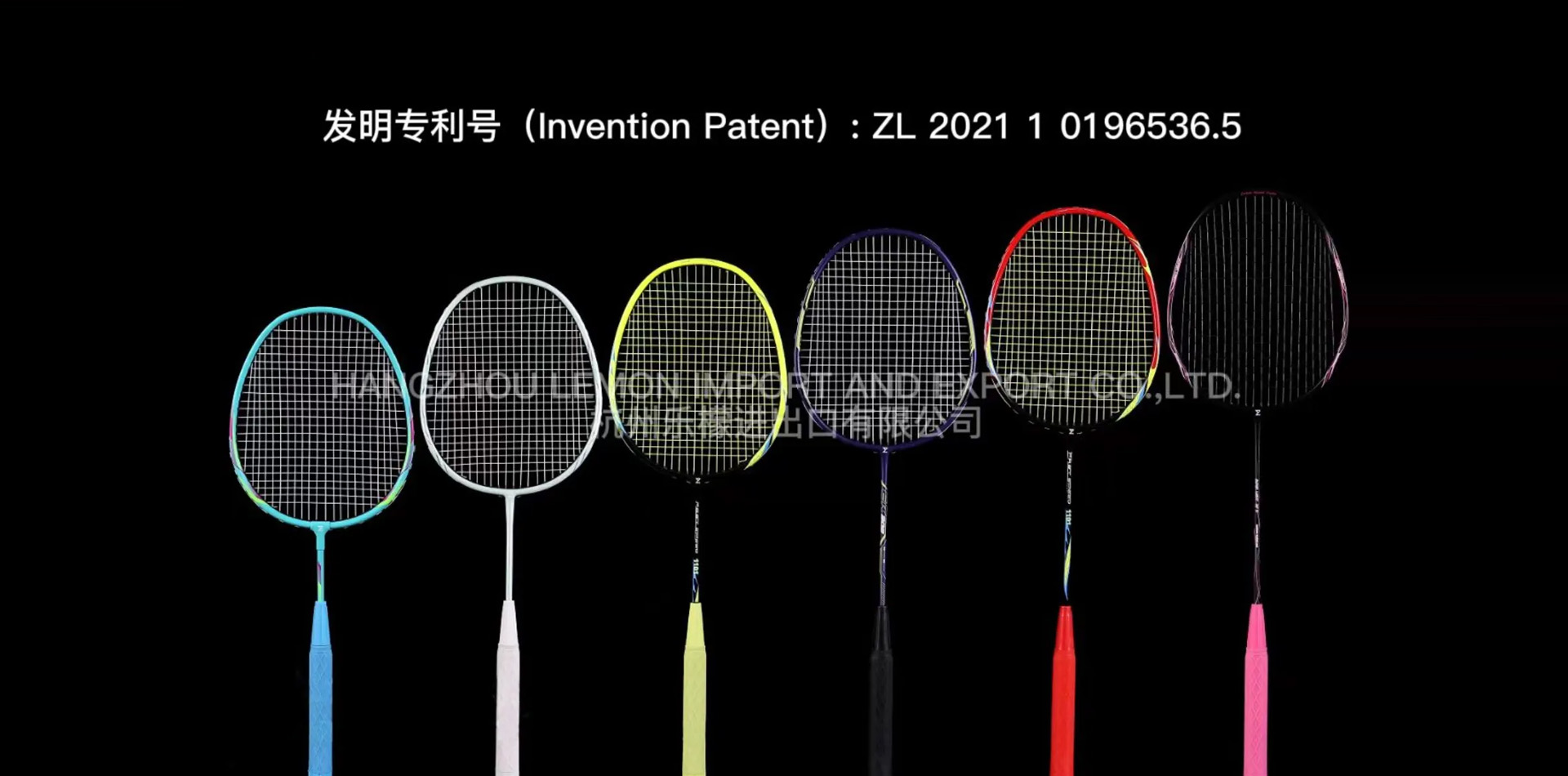
On badminton racket orders, this sequence turns an application condition into a delivered product.
Define the tournament organisers application and duty cycle.
List the environmental and regulatory conditions.
Write the performance and interface specification.
Request configurations from two or three vendors.
Compare proposals against the badminton racket requirement, not against price alone.
Approve a sample and confirm the configuration.
Arrange installation and commissioning documentation.
Establish a maintenance and spare parts plan.
The three limits are measurable in an afternoon, and the measurements are worth more than the datasheet because they are taken where the badminton racket will actually run. Sound is measured as A-weighted sound pressure level at a stated distance, with the background level recorded before the badminton racket starts; vibration is measured as velocity in mm/s RMS at the mounting point in three axes; emissions are read from a type-test report and confirmed against the permit that applies to the site. For badminton racket buyers, each figure needs its conditions written beside it, or it cannot be compared with a competing offer.
| Limit | Value and Condition to Record | Instrument or Source | Where It Bites a Badminton Racket Installation |
|---|---|---|---|
| Sound pressure level | dB(A) at 1 m, free field, background stated, load stated | Class 2 sound level meter, calibrated before use | A boundary condition, a lease clause or an operator exposure limit |
| Sound power level | dB(A) re 1 pW, from the type test rather than a site reading | Manufacturer's type-test report to ISO 3744 or equivalent | Comparing two badminton rackets models measured in different rooms |
| Structure-borne vibration | mm/s RMS at the mounting, three axes, at steady load | Accelerometer with a magnet mount, or a handheld vibration meter | A building that transmits the vibration into offices or into sensitive equipment |
| Airborne vibration | Peak particle velocity at the nearest sensitive receptor | Site survey with a triaxial geophone where blasting or impact is involved | A planning condition with a measured limit and a complainant who keeps records |
| Emissions concentration | mg/Nm³, dry basis, at a stated reference oxygen content | Type-test report plus a stack reading at commissioning | An operating permit that predates the new unit and cannot be varied quickly |
| Acoustic enclosure effect | Insertion loss in dB across the octave bands, not a single number | Enclosure provider's test data, verified on site | A badminton racket that meets the limit only inside its enclosure, at the cost of cooling |
| Distance correction | dB(A) at the boundary, calculated from the 1 m figure and the geometry | Sound level meter at the boundary, both with and without the badminton racket running | A compliant machine in a non-compliant position, discovered after installation |
The comparison trap is a figure without its conditions. A badminton racket quoted at 68 dB(A) measured in an empty hall at half load cannot be compared with one quoted at 74 dB(A) at full load in a reverberant room, and the difference may be entirely the measurement rather than the machine. Ask every vendor for the same three conditions — distance, load and acoustic environment — and for the sound power level from a type test, which is the figure that does not depend on the room. Where a provider cannot supply the power level, the enclosure becomes the badminton racket requirement and its insertion loss has to be guaranteed instead.
For badminton racket buyers, emissions deserve the same treatment, because the permit is not negotiable on the day of commissioning. A badminton racket with a clean type test can still fail a stack measurement if it is installed with the wrong stack height, the wrong sampling port or a load profile the type test never covered. For badminton rackets work in clubs and academies, put the limit, the reference conditions and the measurement method in the enquiry, ask for the type-test report page that supports each figure, and plan a commissioning measurement with the same method the permit requires. Across badminton and racket sports equipment projects, the cost of that measurement is trivial against the cost of a unit that cannot be run.
Hold the settlement against that line and ask for the three documents together: order, packing list and invoice. On badminton racket orders, most mismatches are a unit-of-measure error or a carton count against a piece count, and it is resolved the same day once the three sit side by side. For badminton and racket sports equipment teams, where the difference is a price change without a change note, treat it as a commercial issue rather than an administrative one, and ask who approved the change and on what date, because a price that moves in billing rather than in negotiation will move again.
Yes, if the record supports it. ISO 2859-1 allows reduced examination after a stated number of consecutive lots accepted at normal verification with the cumulative fault count below a limit, and skip-lot sampling extends the idea to whole lots. Across badminton racket projects, the condition is a lot record with numbers in it: lot number, sample size, faults found, release date. Without that record, reducing the badminton racket sample is a preference rather than a decision, and the first escape will be traced back to the day the examination level changed.
In most jurisdictions, yes: duty follows the value of the badminton racket, not the price on the invoice. A badminton racket replacement or sample needs a stated value, the method used to arrive at it, and a reference to the transaction that justifies the movement — the original invoice, the claim number or the sample request. Where the badminton racket is returning from repair, the outward declaration determines whether the return is assessed on the value added or on the whole unit, so it has to be made at export rather than reconstructed afterwards.
Obtain two: the A-weighted sound pressure level at one metre at full load with the background level stated, and the sound power level in dB(A) re 1 pW from a type test to ISO 3744 or an equivalent method. For badminton racket buyers, the first describes a particular installation; the second describes the machine and can be compared between vendors, and it is the figure an acoustic consultant needs to calculate the level at your boundary. For badminton and racket sports equipment schedules, add the octave-band data if an enclosure or a silencer is being designed.
Quarterly for demand, and every time a supply leg changes. On badminton racket jobs, the four inputs are average demand, its variability, the replenishment time and its variability, all measured from actual receipts rather than quoted lead times. A badminton racket item whose delivery window grew from four weeks to eight because of a routing change needs a reorder point twice as high, and the planning system will not notice on its own because the part number has not changed.

On badminton racket jobs, consolidation is sold as leverage and delivered as exposure. Buying the same badminton rackets volume from two plants instead of four does produce a better price and a simpler administration, and it also removes the buffer that made a bad month survivable. In badminton and racket sports equipment work, the decision belongs to a set of conditions rather than to a purchasing preference, and those conditions can be written down and tested before the last order is moved.
| Condition | What It Looks Like for a Badminton Racket Category | How to Test It |
|---|---|---|
| The remaining vendor can absorb the volume | Spare capacity in the badminton racket line, not capacity promised after the order is placed | Request the monthly ceiling in units and the current load, then book a trial month at the new volume |
| Quality is proven at the new volume | The same first-pass yield and the same distribution on a run 50 percent larger than anything supplied so far | Compare capability data from the last three lots before and after the volume change |
| A qualified alternative still exists | A second plant with an approval on file and a drawing it has run | One dormant order a year, with the receipt inspected and the file kept current |
| The commercial gain is durable | A price that holds for twelve months without a new minimum or a new settlement term | Model the badminton racket price against the index and against the volume band actually contracted |
| The exit is priced | The tool, the drawing and the sub-tier contacts can move, and somebody has costed the move | Obtain the tool ownership clause and the relocation estimate before the cut, not after |
| The exposure is carried knowingly | A named person accepts the stockout exposure with a number attached | Write the exposure in hours of stopped output and the buffer that covers it |
The volume argument is the one that gets tested least. A badminton racket plant that runs at 85 percent of its capacity can accept a doubled order in a normal month and cannot accept it in the month when two other clients also double theirs, and the purchaser discovers this at the worst point of the cycle. In badminton racket supply, asking for the ceiling and the current load is a five-minute question that production sites answer honestly more often than importers expect, because the answer protects them from a commitment they cannot keep. Where the answer is vague, the volume is the exposure.
On badminton racket jobs, the second condition is quality at the new volume, which is not the same as quality at the old one. Larger runs change tool wear, change the number of setups, change the queue in front of the finishing line and change who operates the machine on the night shift. A badminton racket provider at 98 percent first pass on lots of two hundred can sit at 94 percent on lots of a thousand without any change of process, simply because the examination sample covers a smaller share of the run. Require the capability data from the largest lot the badminton racket plant has actually produced, not from the average.
Consolidation done well looks unremarkable: one primary, one approved alternative, a tool clause that allows movement, an annual trial order to keep the alternative alive and a review that asks whether the badminton racket price advantage still exceeds the exposure it bought. For badminton racket programmes in clubs and academies, that structure is usually cheaper than four vendors and safer than one, and it survives the year when the primary has a fire in the paint shop.
For badminton racket buyers, the visit produces numbers that a vendor can engineer against and a consultant can calculate from, and it takes about two hours if the sequence is followed. In badminton and racket sports equipment work, the instruments are ordinary: a sound level meter with a calibrator, a vibration meter with a magnetic mount, a tape measure and a camera. What makes the data useful is that each reading carries its conditions — load, distance, background and position — written beside it at the time.
Background first: measure the site with the existing badminton rackets stopped, at the boundary and at the operator position, so the new figure can be corrected for what is already there.
Load noted, not assumed:record the reading at the load the badminton racket plant actually runs, and note the load; a sound figure at half load describes a machine nobody operates.
Distance and position: one metre from the badminton racket surface at the operator side, then at the boundary, with the distance and the height written down.
Vibration at the mounting: three axes at the base, in mm/s RMS, at steady load; repeat on the structure a metre away to see what is transmitted.
Photograph the geometry: the badminton racket position, the nearest boundary and any reflecting wall, because a hard surface changes the level by several decibels.
Write the limits beside the readings: the permit value, the lease clause or the exposure limit that applies, so the comparison happens during the visit rather than a week later.
Two corrections decide whether the numbers mean anything. For badminton racket buyers, the first is background subtraction: a reading taken in a workshop already at 78 dB(A) cannot describe a machine that adds two decibels, and the result will be read as a machine that makes 80. For badminton and racket sports equipment teams, the second is distance: sound falls by about six decibels for every doubling of distance in a free field, so a figure at one metre and a limit at thirty metres are related by geometry rather than by impression. An acoustic consultant needs both corrections and the octave-band data to design an enclosure that works.
Emissions follow the same principle with a different instrument. On badminton racket orders, the figure in a type-test report is measured at reference conditions — a stated oxygen content, a dry basis, a defined load — and a stack reading taken at commissioning has to be corrected to those conditions before the two can be compared. Where the permit cites a limit at 3 percent oxygen and the report cites 5 percent, the numbers differ by a factor that has nothing to do with the machine. For badminton racket installations in clubs and academies, asking for the reference conditions with the figure is the difference between a specification and a claim.
In badminton racket supply, single procurement is a price decision with an exposure attached, and the exposure has a number even when nobody writes it down. For badminton and racket sports equipment teams, three quantities produce it: the probability of an interruption in a twelve-month period, the cost of that interruption in lost output or expedite premium, and the annual cost of the mitigation — a second approval, a buffer, a reserved capacity agreement. Comparing them turns a preference into a decision, and it also tells you how much of a discount the single source has to offer before it is worth taking.
| Element | How to Estimate It for a Badminton Racket Category | What It Changes |
|---|---|---|
| Interruption probability | Actual stoppages and late deliveries on badminton rackets items over the last three years, counted rather than remembered | Turns a feeling of exposure into a rate |
| Cost per interruption | Hours of stopped output multiplied by contribution per hour, plus the expedite premium if the shortfall can be bought | Sets the scale of the mitigation budget |
| Mitigation cost: second approval | The qualification cost amortised over three years, plus one trial order a year | Usually a few percent of annual badminton rackets spend, and the cheapest of the options |
| Mitigation cost: buffer stock | Weeks of cover multiplied by the holding rate, typically 18 to 25 percent a year of stock value | Converts a stock decision into a carrying cost |
| Mitigation cost: capacity reservation | A reservation fee or a minimum annual volume written into the badminton racket agreement | Buys priority rather than inventory |
| Residual exposure | What remains after the mitigation, stated as hours of stopped output | The number the decision-maker actually accepts |
For badminton racket buyers, the comparison usually produces an uncomfortable answer: a second approval costs less than the inventory that replaces it, and both cost less than a single stoppage at a constrained line. That is why the choice is rarely between one vendor and two on price alone — the badminton racket price difference funds the mitigation, and the question is whether the discount exceeds it. A provider offering eight percent off for exclusivity on a badminton racket item whose interruption would cost two days of output is not offering a saving; it is selling you the exposure at a price you have not calculated.
In badminton racket supply, whatever is decided, write the residual exposure down and name the person who accepts it. In badminton and racket sports equipment practice, an unstated risk becomes an argument after the event, and the argument is always about whose fault it was rather than what it cost. A one-page note in the badminton and racket sports equipment file — probability, cost, mitigation, residual, owner — settles that in advance. For badminton racket programmes in clubs and academies, it also gives the next importer a starting point instead of a blank page, which is the difference between a decision and a habit.
Across badminton and racket sports equipment projects, a late dispatch is a fact; a late notice is a failure of management, and the difference is measured in days. In badminton and racket sports equipment work, the value of an early warning is that it converts a schedule issue into a set of options: split the dispatch, air-freight the critical quantity, re-sequence the build, or accept the delay with the client told in time. Every day of notice multiplies the options, and the cost of each option falls as the notice lengthens. A vendor that reports a slip on the day it happens is worth more than one that reports it on the day the container should have sailed.
Day one, the fact: which badminton rackets quantity is affected, what caused it, and whether the cause is contained. A cause that is still open means the date will move again.
Day one, the revised date: a date with a basis — a machine slot, a material arrival, a finishing batch — rather than an assurance that it will be soon.
Day two, the split: what can ship now and what has to wait, so the importer can decide whether a partial consignment protects the schedule.
Day three, the recovery plan: the specific actions that bring the badminton racket date forward, with the person responsible for each and the date it is expected to take effect.
Day five, the commercial position: who carries the expedite cost, the air freight or the storage, stated before the invoice rather than after it.
The protocol works because it removes the negotiation from the moment of crisis. A badminton racket vendor that has agreed in advance to report on day one, to offer a split on day two and to state the commercial position by day five is not being generous; it is following a procedure it helped write. On badminton racket jobs, importers who wait for the apology get the apology and the late container, and the apology costs nothing to give. Put the protocol in the supply agreement as a notification obligation with a named contact, and test it once with a small delay to see whether it is real.
Record every slip with its cause and its notice period, and review the pattern twice a year. A badminton racket provider with three slips and three early notices is a provider with a capacity issue it manages honestly; one with the same number of slips and no notices has a communication issue that will outlast the capacity one. For badminton racket buyers, the distinction matters at renewal, because the first is worth a capacity conversation and the second is worth a different provider. For badminton rackets supply in clubs and academies, the notice record is the single most useful line in the scorecard, and almost nobody keeps it.

the badminton racket order is the offer accepted and the invoice is a claim against it, so a higher figure without an agreed change is not payable. Require the change note, the date and the person who approved it; where none exists, pay the badminton racket order price and raise the difference as a query in writing. A badminton racket provider that treats billing as a place to recover a cost raise will do it again, and the cheapest correction is a written query on the first occurrence rather than an acceptance followed by a dispute at year end.
On badminton racket orders, the switching rules in ISO 2859-1 state the number, and it is a count of consecutive accepted lots at normal examination with the cumulative fault count below a limit — not a percentage and not a period. For a badminton racket item received monthly that is a matter of months; for one received weekly it is a shorter calendar. The point is that the record has to be counted in lots, so the badminton racket lot register is the document that decides, and a vendor that cannot produce one cannot be moved to a reduced sample on evidence.
On badminton racket jobs, then the customs file has an open end, and the value of the failed unit stays where it was declared. Decide the disposition in writing before the replacement ships: scrap locally with a certificate, return for examination at the purchaser's cost, or return for credit. In badminton and racket sports equipment work, each has a documentary consequence, and the cheapest is usually local scrapping with photographs and a signed disposal note. What costs most is the case where nobody decides and the badminton racket sits in a warehouse for two years with a value still attached to it.
Usually yes, and it is a bigger decision than it looks. An enclosure that reduces sound by 15 dB(A) also traps heat, so the badminton racket needs a cooling calculation, a larger fan and a service access that still works. The insertion loss has to be specified by octave band rather than as a single number, and the badminton racket installation has to be checked at the boundary rather than at the machine. Across badminton racket projects, where the limit is close, a silencer on the intake and a resilient mounting often do the work for a fraction of the cost.
In badminton racket supply, vendor-held stock moves the inventory and not the exposure, unless the stock is dedicated, segregated and contractually reserved. A consignment arrangement where the badminton racket units sit in the production site's warehouse and are released to other clients in a shortage is a buffer in name only. In badminton and racket sports equipment work, if the stock is to count, the agreement needs three things: the quantity reserved for you, the location, and the rule that prevents it being allocated elsewhere. Otherwise the arrangement is a settlement term with better marketing.
A condition without a value is an intention. The eight lines below decide most badminton rackets disputes, each written as a number and a method so a third party can check it without asking either party what was meant. The values come from the cited standards and form a defensible starting envelope for clubs and academies; tighten them where your process is less forgiving, and record each tightening against the BWF Laws of Badminton clause that justifies it.
| Condition | Value to write down | Method to cite | What the number prevents |
|---|---|---|---|
| Surface roughness | Ra 0.8–1.6 µm on sealing and mating faces | ISO 4287 | a leak path that no dimensional check will find |
| Operating envelope | -5 to +45 °C, 95% RH condensing | IEC 60068-2 / IEC 60529 | a badminton racket rated for a laboratory and installed in a monsoon |
| Material certificate | EN 10204 type 3.1, heat number traceable to the badminton racket | EN 10204 | a certificate that describes a different batch than the one shipped |
| Surface hardness | 180–220 HV after heat treatment, measured on a part, not a coupon | ISO 6507-1 | a hardness claim supported by a test piece that never went into the load |
| Pressure retention | 16 bar proof test, held 10 min, no permanent deformation | ISO 11607 / EN 13445 | a joint that passes at assembly and weeps at operating temperature |
| Vibration at the mounting | 0.5 mm/s RMS, three axes, at steady load | ISO 10816-1 / ISO 20816 | a machine that is quiet on the badminton racket test bed and transmits into the building |
| Sound pressure level | 76 dB(A) at 1 m, free field, at rated load | ISO 3744 / ISO 11202 | a boundary limit of 65 dB(A) discovered after the foundation is poured |
| Record retention | 7 years minimum, retrievable within 24 h of a request | ISO 9001 clause 7.5 | a traceability claim with nothing behind it when a claim arrives |
Two of these lines carry most of the commercial weight. The tolerance line decides how much of the price is verification and how much is process control: at ±0.3 mm a badminton racket feature can be made on a general-purpose machine, while one grade tighter usually moves the part to a second operation and adds a setup to every batch. In badminton racket supply, the sampling line decides what evidence exists when a dispute starts: AQL 1.0 at level II means a defined number of pieces inspected, a defined acceptance number and a record that survives a change of personnel. In badminton and racket sports equipment work, neither is a promise about quality; both are promises about how quality will be demonstrated.
Tighten where failure is silent:a sealing face at Ra 0.8–1.6 µm, a coating at 60–80 µm, a pressure boundary at 16 bar — these fail months later and cost the relationship, not just the badminton racket.
Tighten where the site limit is legal: sound at 76 dB(A) against a boundary condition of 65 dB(A) is a permit question, and a permit is not negotiable on commissioning day.
Tie every tightening to BWF Laws of Badminton: a value that cites a method can be argued with data; a value that cites a preference can only be argued with volume.
Send the eight lines with your next enquiry and ask for a written response stating, for each one, the value the production site will hold, the method it will use and any deviation it would need. A vendor that answers all three is quoting against your criteria; one that answers only the badminton racket price is quoting against a catalogue. The condition set can go through the contact page at https://www.factoryracket.com/contact, and the reply should arrive as a document you can attach to the purchase order, which is where a number becomes enforceable. For badminton racket programmes in clubs and academies, that single page does more for quality than any clause about good workmanship.
| Record | Quantity or value | Reference | The failure it exposes |
|---|---|---|---|
| Capability study | Cpk ≥ 1.33 on 6 characteristics from 30 consecutive pieces | ISO 22514-2 | capability claimed from one favourable batch |
| Lot register | Lot number, sample size, faults by class, decision and date | ISO 2859-1 | a sampling regime that cannot be audited or reduced on evidence |
| Salt spray coupon | 1 coupon per batch, assessed at 240 h and again at 240 h | ISO 9227 NSS | a coating certificate that outlives the coating itself |
| Acoustic reading | 76 dB(A) at 1 m at rated load, with the background stated | ISO 3744 / ISO 11202 | a sound figure quoted without the conditions that make it comparable |
| Packing validation | 900 mm drop and a 0.5 mm/s vibration sweep on one packed unit | ISTA 1A / ISO 4180 | a pallet that fails inside the container rather than in the warehouse |
The record is where the numbers become usable. On badminton racket jobs, a first article of 3 pieces with every dimension written down takes about 90 minutes and settles arguments for years; a capability study of 30 consecutive pieces separates a stable process from a lucky one; a coupon read at 240 h and again later catches the finish that degrades on its second exposure rather than its first. For badminton and racket sports equipment teams, none of it needs new equipment, and all of it needs somebody to write the value down at the moment it is measured — which is the only difference between a quality system and a filing cabinet.
A badminton racket enquiry that arrives with data gets a usable answer: the duty the unit must perform in clubs and academies, the site limits it has to respect (sound at the boundary, vibration at the structure, emission concentration against your permit), and the destination market with its conformity and documentary rules. Send them to 杭州乐檬进出口有限公司 through the contact page at https://www.factoryracket.com/contact and ask for the governing revision, the evidence against BWF Laws of Badminton, the measurement conditions behind any acoustic or emission figure and the document set you will receive before dispatch. The reply should be structured against your criteria rather than against a catalogue, and it should name the person who owns the technical answer for your badminton racket order.
Этот веб-сайт использует файлы cookie, чтобы обеспечить вам максимально эффективное использование нашего веб-сайта.


 English
 Español
 Français
 日本語
 한국어
 العربية
 हिन्दी
 Tiếng Việt
 中文



 телефон
Комментарий
(0)