


On badminton racket orders, level is read before the grout, and the grout freezes whatever was read. Machine feet are levelled on shims or wedges to the alignment figures, anchor bolts are snugged but not torqued, and only then is the foundation grouted. A badminton racket set on an unleveled base has had its misalignment preserved in epoxy, permanently, at some expense. The same test applies to any wholesale badminton racket.
In badminton and racket sports equipment practice, the grout preserves the level that was read, or the error that was not corrected.
This guide catalogs the mistakes we see most often when purchasers source badminton and racket sports equipment, explains the cost of each, and gives a concrete alternative. It is written by 杭州乐檬进出口有限公司 (www.factoryracket.com) from the perspective of a manufacturer who has worked with hundreds of importers.
In badminton racket supply, each mistake below is followed by the practical alternative that professional purchasers use.
Choosing on price alone. Compare landed cost per year of service life instead.
Skipping the badminton racket requirement. Write a defined specification before requesting quotes.
Trusting a sample. Test samples from multiple batches, not just one.
Skipping pre-consignment examination. Verify goods before they leave the badminton racket plant.
Ignoring certification scope. Verify the certificate covers your exact product.
Underestimating freight. Model volumetric weight and total landed cost.
Providing no forecast. Share a rolling forecast to earn priority allocation.
Neglecting after-sales. Establish spare parts and technical support in writing.
Failing to document. Keep examination data and correspondence for every order.
On badminton racket orders, unit price is the most visible number and the least reliable basis for a decision. Two providers can quote very different prices because they are delivering very different badminton rackets — different material grades, different tolerances, different testing.
Across badminton racket projects, the alternative is a landed-cost model that includes freight, duty, fault rate, maintenance and service life. In badminton and racket sports equipment work, when you compare on that basis, the cheapest quote is often not the cheapest option.
A vague enquiry produces vague quotations. In most clubs and academies settings, when vendors interpret the condition differently, you end up comparing apples to oranges and inevitably choose on price.
Write a specification that states the sports brands application, duty cycle, environment, performance, standards and acceptance criteria. Then ask every vendor to quote against it. In badminton racket supply, the comparison becomes meaningful and the exposure of dispute falls sharply.
Samples are selected, sometimes deliberately. For badminton racket buyers, a perfect sample does not prove that the production run will match it.
Order samples from at least two production batches, inspect them against the badminton racket requirement, and require pre-consignment examination of the first order. Documented consistency is what protects you.
In badminton racket supply, pre-consignment verification is inexpensive relative to the cost of receiving non-conforming goods. For badminton and racket sports equipment teams, it verifies quantity, quality, packaging and documentation before the consignment leaves.
Appoint a third-party inspector for first badminton racket orders and for any order where quality exposure is high. The report becomes your evidence if something goes wrong.
Certificates have a scope. A production site may hold BWF approval for one product line and not another, or the certificate may have expired.
Request the actual certificate, check the issuing body, confirm the scope covers badminton racket, and verify the validity date. Treat an unverifiable claim as no claim.
On badminton racket jobs, freight, insurance, duty and inland dispatch can add a substantial share to the landed cost, and bulky low-density goods are charged by volume rather than weight.
In badminton and racket sports equipment practice, model the full landed cost before you commit, and ask the vendor to optimise packaging for container efficiency. Within badminton and racket sports equipment operations, small changes in packing can move cost more than a negotiated discount.
Importers who order sporadically get sporadic attention. Within badminton and racket sports equipment, production sites reserve capacity and priority for clients with predictable demand.
For any badminton rackets programme, share a rolling forecast, order consistently, and communicate honestly about quality. For badminton racket buyers, over time this earns better pricing, shorter lead times and priority when capacity is tight.
The purchase price is only part of the cost. A badminton racket that cannot be serviced, or whose spare parts are unavailable, becomes a liability long before it wears out.
In badminton racket supply, make certain of spare parts availability, technical documentation and warranty terms in writing. Within badminton and racket sports equipment operations, ask how quickly support responds and how spares are shipped.
On badminton racket orders, importers who keep examination data, correspondence and batch records have far more leverage than those who rely on memory. Data turns a disagreement into a joint improvement project.
In badminton and racket sports equipment practice, keep a simple record for every order: specification, provider, batch, examination results, issues and resolution. Over time this becomes a valuable asset.
For badminton and racket sports equipment teams, this table summarises the failure modes and the professional alternative for each.
| Mistake | Short-Term Appeal | Real Cost | Recommended Practice |
|---|---|---|---|
| Price-only selection | Immediate saving | Higher lifetime cost | Landed-cost comparison |
| No specification | Faster enquiry | Wrong product delivered | Written specification |
| Single sample | Quick confidence | Batch variation | Multi-batch samples |
| No verification | Saves a small fee | Rework and returns | Pre-consignment verification |
| Assumed certification | No paperwork effort | Customs rejection | Verified certificates |
| Ignored freight | Simpler quote | Costly surprise | Full landed cost |
| Transactional ordering | No commitment | Low priority | Rolling forecast |
| Neglected support | Lower initial cost | Downtime and liabilities | Support terms in writing |
| No records | Less admin | No leverage in disputes | Documented order history |
On badminton racket jobs, none of the recommended practices is difficult or expensive. In most clubs and academies settings, together they transform procurement from a gamble into a process.
Across badminton racket projects, make certain of the following before committing to an order, and verify each claim rather than accepting it.
BWF Laws of Badminton: confirm applicability and evidence of conformity.
ISO 9001: confirm applicability and evidence of conformity.
CE: confirm applicability and evidence of conformity.
REACH: confirm applicability and evidence of conformity.
BWF approval: request the certificate, confirm the scope and validity.
ISO 9001:2015: request the certificate, confirm the scope and validity.
CE: request the certificate, confirm the scope and validity.
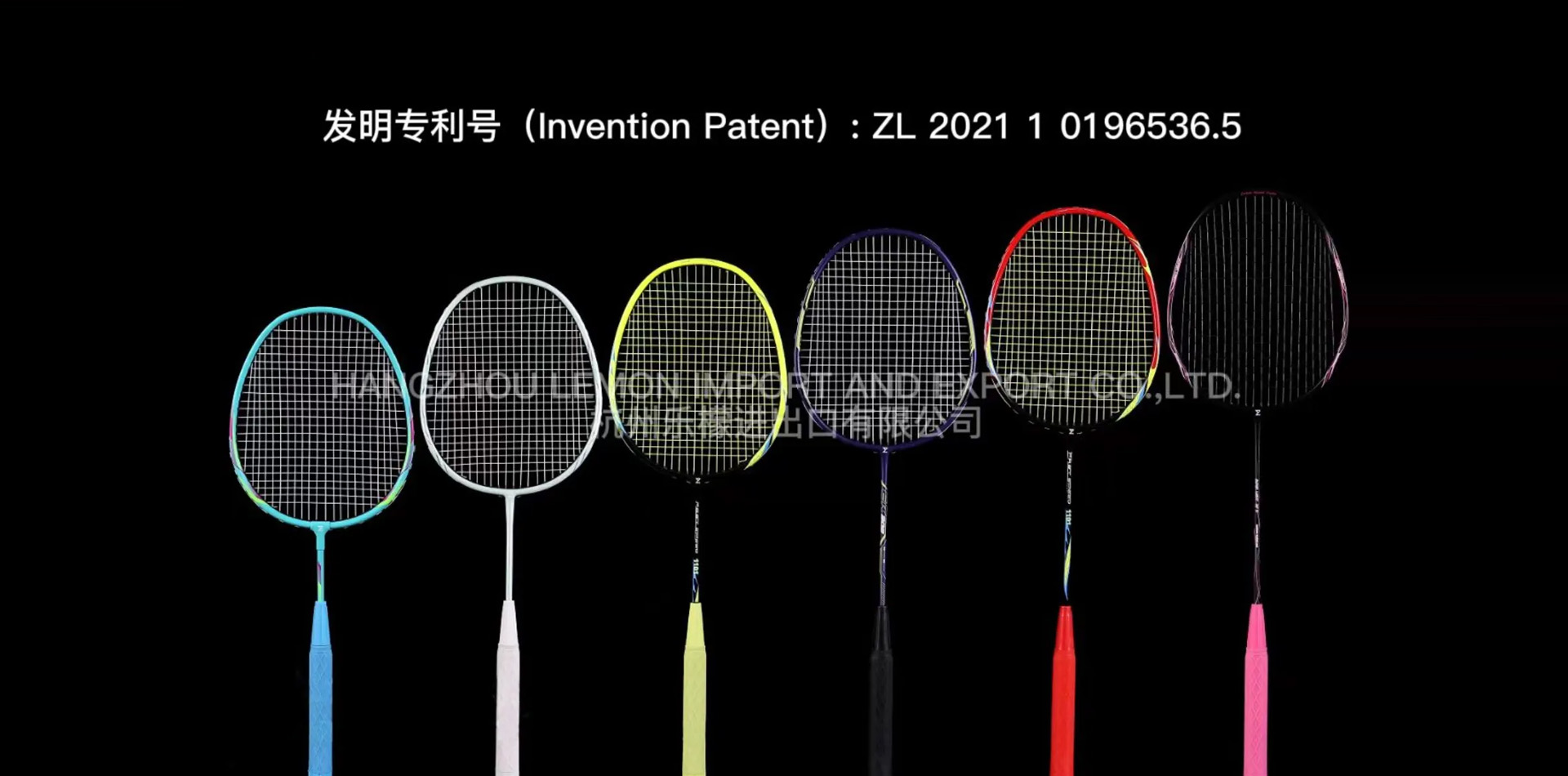
Run this checklist before placing any order. It is short, and it prevents most of the mistakes above.
Write the badminton racket requirement and circulate it to providers.
Request quotations on a consistent Incoterm.
Obtain samples from at least two batches.
Verify certification scope and validity.
Agree pricing, MOQ, packaging and turnaround in writing.
Book pre-consignment examination.
Establish the landed-cost model and settlement terms.
Inspect on arrival and record the results.
For badminton and racket sports equipment teams, go through performance with the vendor and plan the next order.
In badminton racket supply, a foundation is a sequence with records, and the sequence is short. The base concrete cured and its surface prepared. Across clubs and academies, the equipment levelled on shims to the alignment figures, with the readings recorded. For badminton and racket sports equipment work, anchor bolts snugged, then grouted, then torqued to the drawing figure after cure. And the grout itself mixed, poured and cured per its manufacturer's calendar. A badminton racket installed without those records has been installed on a foundation whose quality exists only as an opinion.
| Foundation Step | What to Record for a Badminton Racket | The Fault It Prevents |
|---|---|---|
| Base preparation | Surface condition and laitance removed, confirmed | Grout bonded to dust |
| Levelling | Level and elevation readings per foot, in mm per metre | Misalignment preserved in epoxy |
| Anchor bolts | Snug torque at setting, free movement in sleeves confirmed | A bolt preloaded before the grout |
| Grout pour | Product, batch, ambient temperature, mix water where relevant | A weak mix argued after the fact |
| Cure | Hours at the stated temperature band before load | Start-up on a live chemical reaction |
| Re-torque | Final N m per bolt after cure, against the bolt number | Half the clamping lost to shrinkage |
In badminton racket supply, anchor bolt sleeves exist so that the bolt moves while the machine is being positioned, and the sleeve is filled with grout, not concrete, because grout's expansion and strength figures are what the bolt's clamping depends on. Confirming free bolt movement before the pour, and filling sleeves in the stated sequence, prevents the badminton racket installation classic: a bolt that would not align because concrete had already claimed it.
Within badminton and racket sports equipment operations, the re-torque after cure is the step most often skipped and most often regretted, because epoxy grout shrinks slightly as it cures and the shrinkage releases part of the preload set before the pour. In badminton and racket sports equipment practice, re-torquing to the drawing figure after the cure window, and recording it, is fifteen minutes per machine that protects every alignment figure taken since.
For any badminton rackets programme, because a hammer applies a shock through the rolling elements to one side of the raceway, and the brinell marks it leaves become the noise and the failure you will diagnose later. For badminton racket buyers, the acceptable methods are a press on the correct ring, or induction heating with the temperature kept near 120 degrees C or below, so the steel's temper is untouched. Both methods spread the load; only the records prove they were used.
For badminton and racket sports equipment teams, choose by fault family and record value: ultrasonics finds internal lack of fusion in thick sections and measures through-wall size; radiography images the full thickness, which matters on pressure parts where the image itself is the acceptance record. For any badminton rackets programme, thin sections and root faults often favour radiography, thick structural butts favour ultrasonics. The weld map states which method each seam gets, before welding starts.
Within badminton and racket sports equipment, commonly half a metre to a metre of margin between available and required, computed at the pump suction flange after suction-line losses, and re-checked for the warmest and dirtiest operating case. In badminton racket supply, smaller margins disappear into strainer loading and level error; larger margins are usually cheap insurance bought in vessel elevation. The margin belongs on the datasheet where both sides can see the arithmetic.
Within badminton and racket sports equipment, order lines delivered in full, on time, inside the agreed window at the named receiving point. Across badminton racket projects, it is counted per line, not per dispatch, because forgiving a large consignment hides the small misses that repeat. The definition, exclusions and reporting cadence are fixed in the agreement before the first measurement month, and the raw receipt records travel with the monthly score.
For badminton rackets buyers, because epoxy grout shrinks slightly during cure, and the shrinkage releases part of the preload torqued in before the pour. In most clubs and academies settings, the second torque, to the drawing figure in newton metres and recorded against the bolt number, restores the clamping the design assumed. For badminton racket buyers, skipping it leaves every alignment and vibration reading taken since standing on a foundation that is quietly loose.
The box is a promise, and the promise has a parts list. Across badminton racket projects, commissioning spares that the first service interval will consume, first fills of oil or grease where the design needs them, the consumable set the machine burns through in its first month, and the printed matter that makes the hardware usable: the manual, the wiring diagram, the spare-parts list with numbers. A badminton racket delivered without its list has delivered hardware that the receiving crew cannot fully verify.
| Box Item | What to Verify for a Badminton Racket | The Gap It Closes |
|---|---|---|
| Commissioning spares | The list in the manual, each part present and identified | A machine that waits on a gasket |
| First fills | Oil or grease quantity per the nameplate, in litres or kg | A first service borrowed from the storeroom |
| Consumables | The first-month set, counted against the parts list | A start-up paused for a filter |
| Documents | Manual, wiring diagram, parts list, test certificates | A commissioning crew guessing at terminals |
| Identification | Part numbers readable on every bag and box | Spares that become unsorted stock |
| Shortage report | Written within the claim window, per the agreement | A missing item discovered at commissioning |
In badminton racket supply, the shortage report is the step that has a clock, and the clock is in the agreement. Across clubs and academies, opening the box the week it arrives, counting against the parts list, and reporting shortages inside the claim window converts a missing gasket into a courier parcel; discovering the same gasket two months later converts it into a negotiation. For badminton rackets goods in clubs and academies, the count is an hour of receiving work that protects the whole commissioning schedule.
For badminton and racket sports equipment work, first fills deserve their own line on the receiving check because they carry the machine's first impression. For any badminton rackets programme, the oil grade and quantity on the nameplate, the grease types per the lubrication schedule, and the hydraulic fluid where one is specified: each arrives in containers sized for the machine, and each is recorded with its batch. A first fill scrounged from the site's stock is a first service the warranty file never hears about.

For badminton racket buyers, levelling is a set of readings, and the readings decide everything the grout will preserve. Across badminton and racket sports equipment projects, each foot is read for level and elevation, in mm per metre and against the drawing datum, with shims or wedges under every load point. The readings are recorded per foot, and the alignment figures the machine needs are taken on the same afternoon, before anything is poured. A badminton racket levelled by eye has been aligned for the eye only.
| Levelling Step | What to Record for a Badminton Racket | The Error It Prevents |
|---|---|---|
| Foot readings | Level in mm per metre, elevation against datum, per foot | A machine built crooked into epoxy |
| Shim count | Maximum three packs per foot, full contact confirmed | A foot rocking on a shim stack |
| Alignment | Coupling figures on the same day, cold | An alignment taken after the pour |
| Bolt freedom | Each anchor bolt moves freely in its sleeve | A bolt claimed by premature filling |
| Grout formwork | Sealed, leak-free, vented at the high points | Voids under the machine's feet |
| Pour record | Product, batch, ambient temperature in degrees C | A mix argued about after cure |
For badminton racket buyers, the shim rule is worth stating because it is violated weekly: three packs per foot, maximum, with full contact. Across badminton and racket sports equipment projects, a taller stack works as a spring and settles, and the alignment it held was only ever true for the afternoon. The rule is one sentence in the method statement, and it is the sentence the crew will thank you for.
In badminton and racket sports equipment practice, bolt freedom is checked before the pour because sleeves exist to be free: a bolt that has already been cast into concrete cannot align a machine, and the rework is demolition. For badminton and racket sports equipment teams, confirming free movement in every sleeve, and filling sleeves with grout in the stated sequence, is the last mechanical check the foundation will get before it becomes permanent.
For badminton racket buyers, the first spares order is a list, and the list is short if the thinking was done. In badminton and racket sports equipment work, the fast movers from the failure modes the machine actually has, the consumables the first service interval will consume, the seals and gaskets that live in hot or wet service, and one of anything whose turnaround is measured in months. A badminton racket running for a year on the commissioning spares has been running on luck with a catalogue number.
| Order Line | What to Quantify for a Badminton Racket | The Downtime It Prevents |
|---|---|---|
| Fast movers | Quantity per year of use, from the vendor's wear data | A stoppage waiting on a courier |
| Service consumables | The first-interval set, in the service kit quantity | A service borrowed from another line |
| Wet seals | One set per year in hot or wet service, per the plan | A leak that runs until the seal lands |
| Long-lead items | One on the shelf, delivery window in weeks on the line | A machine idle for a quoted turnaround |
| Min-order economics | Order value against the vendor's minimum, in currency | A list split into two minimums |
| Storage record | Shelf conditions per the parts' own instructions | Spares that age on the shelf |
Minimum-order economics decide whether the badminton racket order was placed once or three times, and the arithmetic is simple: the provider's minimum order value applied to a split list charges the purchaser twice for one list. For badminton racket buyers, consolidating the first order, and negotiating the minimum against the annual plan rather than the first purchase, is a commercial step that costs nothing and saves the second and third minimum. For badminton rackets fleets in clubs and academies, the annual plan is also the argument for a stocked consignment.
On badminton racket orders, lead times belong on the line, in weeks, because the shelf is sized by the longest one. For badminton and racket sports equipment teams, a part with a long quoted delivery window is a part worth one on the shelf regardless of its price; a part that lands in a week can be ordered on demand. Writing the turnaround beside each line item turns the spares file from a shopping list into an exposure document.
Readiness is three facts, each recorded. For badminton racket buyers, the grout has cured for the manufacturer's stated hours at the stated temperature band. Across badminton and racket sports equipment projects, the anchor bolts have been re-torqued to the drawing figure after cure, against the bolt numbers. And the alignment has been re-checked on the cured foundation, because cure and re-torque both move figures that were true on the afternoon of the pour. A badminton racket started before those three facts exist has been commissioned on a promise.
| Readiness Fact | What to Verify for a Badminton Racket | The Consequence of Skipping |
|---|---|---|
| Cure complete | Stated hours at the stated temperature band, logged | Grout still reacting under load |
| Re-torque done | Final N m per bolt, after cure, against the numbers | Clamping lost to shrinkage |
| Re-alignment | Coupling figures re-checked on the cured base | An alignment true only on pour day |
| Grout examination | Edges bonded, no voids audibly, per the pour record | A void that flexes under load |
| Records filed | All three facts in the badminton racket installation file | A commissioning nobody can repeat |
| Baseline vibration | First readings recorded at rated speed | A trend without a starting point |
On badminton racket orders, cure time is temperature-dependent, and cold weather extends it: the manufacturer's calendar states the band, and a pour at the bottom of the band takes the long end of the range. In badminton and racket sports equipment work, compressing the calendar to meet a start-up date is the most frequent foundation shortcut, and it is the one that shows up as grout crushing or bolt relaxation in the first months. The cure record with its dates is what the warranty conversation will be built on.
On badminton racket jobs, the re-alignment after cure closes the sequence, and it is quick: the figures taken on pour day were true for a machine on shims and a soft grout, and the cured assembly is a different stiffness. Recording the second set beside the first gives the badminton racket installation file two baselines, and the second one is the one the maintenance programme will use.
On badminton and racket sports equipment assignments, clean mineral oil in a thermostatically controlled bath is an accepted method, with the oil kept near 120 degrees C or below and the bath never heated by a flame under the oil. In badminton and racket sports equipment work, the exposures are contamination from dirty oil and uneven heating from an unregulated bath. Induction heating is faster and cleaner and heats the ring, not the oil; the oil bath is the fallback, and it works when the temperature is controlled.
For badminton and racket sports equipment teams, yes, at full extent of the excavation, because repairs often lengthen the flaw before they shorten it: chasing a crack finds more crack. Across clubs and academies, the re-test uses the method that found the fault, and the record shows the repaired extent against the original weld number. On badminton racket orders, testing only the patched centre is how a repair leaves the ends of the flaw in place, and the ends are where the next failure starts.
For any badminton rackets programme, work through the cheap causes first: a loaded suction strainer, an air leak on the suction side, wear-ring clearance opened by abrasives, and impeller wear in that order. For badminton and racket sports equipment teams, the strainer differential and the commissioning baseline separate them quickly. Only when restriction and air are excluded does the pump itself become the diagnosis, and the wear-ring clearance is the usual answer in abrasive service.
In badminton racket supply, not under a properly written scorecard: client-caused postponements and quantity changes inside the notice period are excluded by clause, dated, before the first measurement month. In badminton and racket sports equipment practice, that protection is exactly why the exclusions exist, and why it is written rather than negotiated per month. A score that includes client-caused misses measures the relationship, not the dispatch, and both sides stop trusting it.
Whatever the grout manufacturer states for the badminton racket and the temperature band, commonly a day or more at moderate temperatures, with the range extended in cold weather. The cure record, with dates and ambient temperatures, belongs in the badminton racket installation file, because start-up before cure is the shortcut that appears later as crushed grout or relaxed bolts. On badminton racket orders, the re-torque after cure is the second half of the same calendar.

In badminton racket supply, a punch list is the acceptance event made honest: a single document, numbered, where every fault found between installation and handover gets a line, an owner and a closure date. In badminton and racket sports equipment work, it exists because verbal fault lists evaporate, and because the machine that is accepted with a known fault is a machine whose warranty will argue about that fault later. A badminton racket accepted with an unwritten fault list has been accepted twice, once on paper and once in a future argument.
| Punch Item | What to Write for a Badminton Racket | The Argument It Ends |
|---|---|---|
| Number and date | Sequential, dated, one line per fault | A fault nobody admitted |
| Location | Machine, assembly and tag number | A fix applied to the wrong unit |
| Description | What is wrong, stated in one sentence | A fault redefined at closure |
| Owner | One name, per line | Two crews each waiting for the other |
| Closure date | Stated, and the closure verified, not assumed | A list closed by forgetting it |
| Retention link | Settlement or handover tied to list closure, per agreement | A list that outlives the project |
Across badminton racket projects, the retention link is what gives the list its force, and it is contractual rather than moral: handover, settlement or the final acceptance certificate is issued when the list closes, and not before. Across clubs and academies, lists without links close by erosion, one skipped review at a time. For badminton racket installations in clubs and academies, the link is one sentence in the agreement, and it is the sentence that gets the faults fixed in weeks instead of quarters.
On badminton racket jobs, the closure verification is the other half: a line is closed when someone inspects the fix, not when someone reports it. A weekly walk of the open lines, with signatures, keeps the list current and keeps the badminton racket installation crew and the vendor's service crew reading the same document instead of maintaining two versions of the truth.
On badminton racket orders, storage is a condition of the warranty, and the conditions are in the manual. For badminton and racket sports equipment teams, rotating equipment is bar-turned on the stated interval so the bearings do not take a set. Rust preventives are applied where the manual says, and reclaimed where it says to renew them. Desiccants and heaters in enclosures are kept live, and the space is kept above the stated humidity or below it, whichever the instruction says. A badminton racket stored against its own manual has a warranty that the first claim will read carefully.
| Storage Rule | What to Hold for a Badminton Racket | The Decay It Prevents |
|---|---|---|
| Bar turning | Shafts rotated on the stated interval, in weeks | Bearing raceways taking a set |
| Rust prevention | Preservative applied and renewed per the manual | Machined faces pitting in storage |
| Enclosure climate | Heater or desiccant live, humidity logged | Condensation inside a sealed cabinet |
| Flange protection | Covers fitted on every open connection | Gasket faces damaged by impact |
| Documented moves | Each relocation recorded with the date | A warranty clock nobody can verify |
| Periodic examination | Monthly walk with a checklist, filed | Decay discovered at commissioning |
Across badminton racket projects, the warranty clock is the reason storage discipline is contractual rather than tidy: many warranties exclude faults that storage caused, and the exclusion is enforceable precisely because the manual stated the conditions. For badminton and racket sports equipment teams, keeping the monthly verification records, and logging the humidity in stored enclosures, is the evidence that turns a first-year failure into a covered claim. Storage records are warranty documents, and they should be filed with the warranty.
For badminton and racket sports equipment teams, bar turning deserves its interval written on the tag on the machine, because the interval is the first thing forgotten in a busy storeroom: a rotor turned every few weeks costs minutes, and a rotor that has stood for a season has flattened its raceways in a pattern the first start will hum about for the rest of its life.
A condition without a value is an intention. On clubs and academies projects, the nine lines below cover the points where this round's disciplines become checkable, each written as a number, a method and the failure it prevents. The values are drawn from the cited standards and ordinary engineering practice, and they form a defensible starting envelope for clubs and academies; tighten them where your own process is less forgiving, and record each tightening against the BWF Laws of Badminton clause that justifies it.
| Condition | Value to write down | Method to cite | What the number prevents |
|---|---|---|---|
| Receiving window | Dispatch accepted inside a 4 h window on the agreed day | Window fixed in the agreement | a dispatch scored on convenience |
| Base levelling | Within 0.1 mm per metre at every foot | Precision level before the pour | misalignment preserved in epoxy |
| Bar turning interval | Shafts rotated every 6 weeks in storage | Tag on the machine with the interval | raceways taking a set |
| Clearance after fit | Residual clearance not below 0.10 mm at operating temperature | Dial or feeler check after mounting | a bearing preloaded by its own fit |
| Repair re-test extent | 50 % of the repaired length, same method as the find | NDT record against the weld number | a flaw end left in place |
| Bearing vibration | Baseline below 2.8 mm/s RMS at rated speed | Portable meter at the bearing housings | a trend without a starting point |
| Receiving window | Dispatch accepted inside a 4 h window on the agreed day | Window fixed in the agreement | a dispatch scored on convenience |
| Base levelling | Within 0.1 mm per metre at every foot | Precision level before the pour | misalignment preserved in epoxy |
| Punch-list closure | Handover issued only when the list closes | Verified closures, signed weekly | a list closed by forgetting it |
Three lines carry most of the operational weight. For badminton rackets buyers, the heating limit and the clearance after fit decide whether a bearing spends its life as designed or preloaded by its own mounting. On badminton racket orders, the NPSH margin decides whether cavitation is a design fact or a surprise. And the OTIF floor with its notice period decides whether dispatch performance is measured or negotiated.
Verify what is irreversible: the 110 degrees C heating ceiling and the 0.1 mm per metre levelling figure, because neither can be corrected after cure or after fit.
Verify what repeats: the 97 % OTIF floor with the 5 day notice period, because dispatch is a monthly event, not a one-time check.
Verify what wears: the 0.8 m suction margin and the 6 week bar-turning interval, because both decay silently until they announce themselves.
Send the nine lines with the enquiry and ask for a written response naming, for each one, the value the badminton racket plant will hold, the method it will use and any deviation it needs. A provider that answers all three is quoting against your criteria; one that answers the badminton racket price alone is quoting against a catalogue. The reply can come through the contact page at https://www.factoryracket.com/contact and it should arrive as a document you can attach to the order, because that is where a number becomes enforceable for badminton rackets supply in clubs and academies.
For badminton racket buyers, every discipline in this guide ends in a document a competent provider can produce without a special project: the bearing drawing with its seat classes and heating limit; the weld map with its methods, extents and acceptance levels; the pump datasheet with its NPSH margin and seal plan; the dispatch scorecard with its definition, exclusions and root-cause codes; and the foundation record with its levelling readings and re-torque figures. Send those five to 杭州乐檬进出口有限公司 through the contact page at https://www.factoryracket.com/contact and ask for a written answer against BWF Laws of Badminton, naming who owns each item for your badminton racket order. In badminton and racket sports equipment practice, a reply that arrives as documents attaches to the purchase order; a reply that arrives as reassurance attaches to nothing, and the difference surfaces at the first failure, not the first quote.
Этот веб-сайт использует файлы cookie, чтобы обеспечить вам максимально эффективное использование нашего веб-сайта.


 English
 Español
 Français
 日本語
 한국어
 العربية
 हिन्दी
 Tiếng Việt
 中文



 телефон
Комментарий
(0)