


The difference between a good badminton rackets supplier and an expensive mistake usually shows up in three places: process discipline, documentation, and how the factory behaves when something goes wrong. This guide walks through each area with concrete checks you can run before committing an order.
In commodity categories, a supplier switch is a spreadsheet exercise. In badminton and racket sports equipment, it is an operational risk: a new factory means new tooling, new process quirks and a new failure profile your customers will discover before you do. Getting the first selection right is therefore the highest-leverage decision in the whole sourcing cycle.
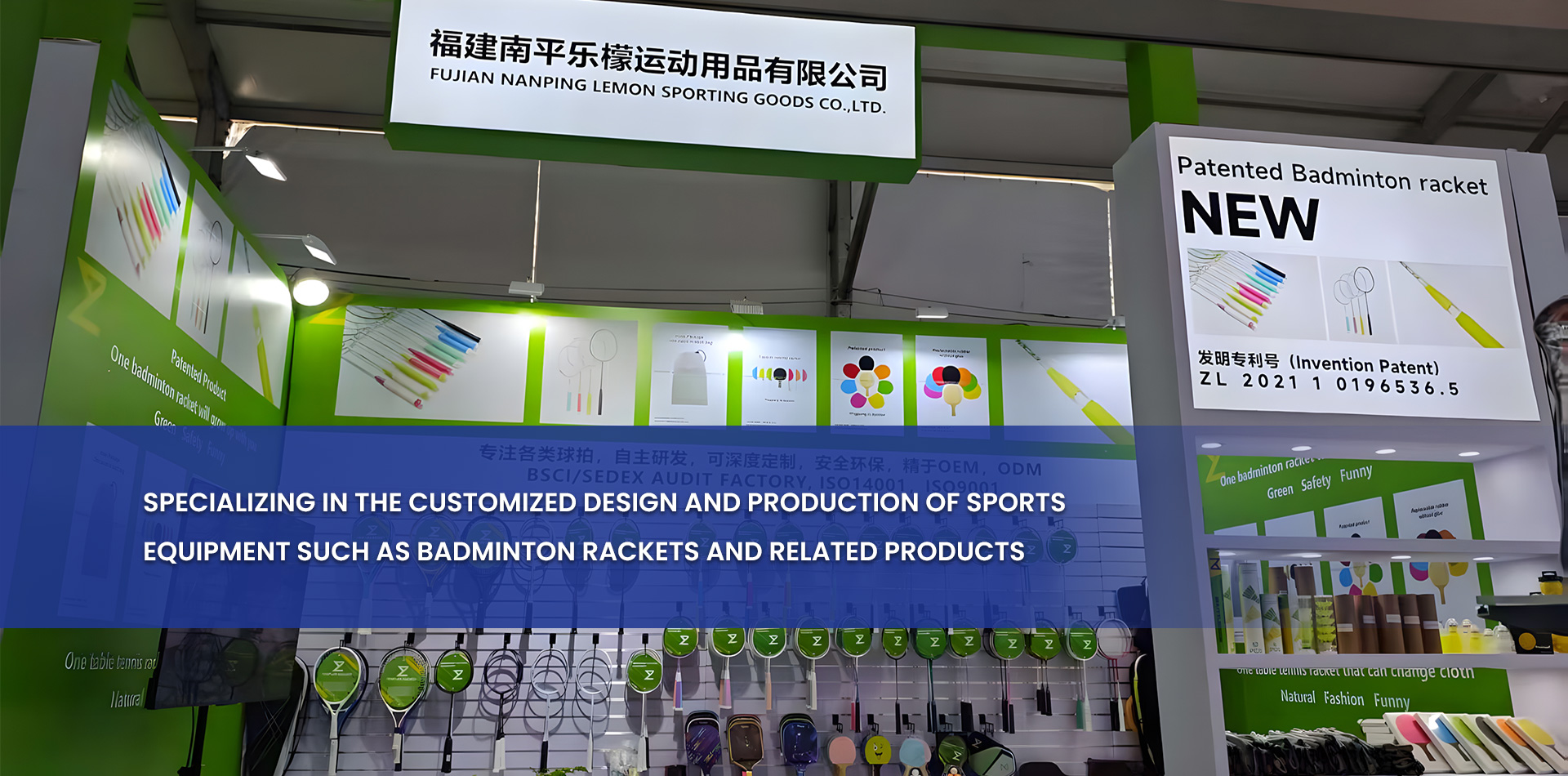
As a manufacturer based in China, æå·ä¹æª¬è¿åºå£æéå ¬å¸ (www.factoryracket.com) supplies badminton rackets, shuttlecocks, tennis rackets and related products to customers in more than forty markets. In this guide we explain what actually determines quality in this category, how to assess a factory before you commit, and how to build a supply relationship that holds up over years of repeat ordering.
Before you send a request for quotation, be precise about what you are buying. These are the questions that separate a professional sourcing decision from a hopeful one.
What is the production capacity and current lead time? A factory that cannot state monthly capacity in units cannot forecast reliably.
Which quality standards apply, and can they evidence compliance? Ask for BWF Laws of Badminton, ISO 9001 documentation rather than a verbal claim.
Is material traceability documented? Certificates of material origin prevent costly surprises.
What is the defect rate and how are returns handled? Ask for historical data, not a policy statement.
Can they customize to your market's specification? Voltage, sizing, labelling and packaging often differ by country.
What after-sales support is included? Spare parts availability and technical support determine lifetime cost.
What is the total landed cost? Freight, duty and durability matter more than FOB price.
Quality in badminton and racket sports equipment is the sum of four things: material selection, manufacturing precision, assembly consistency, and testing discipline. A product can look identical to a competitor and behave completely differently after six months in service if any one of these is weaker.
Material grade: the raw material must match the specification, with certificates to prove it.
Manufacturing precision: tolerances must hold across the production run, not just the sample.
Assembly consistency: repeatable processes prevent batch-to-batch variation.
Testing discipline: functional and safety testing must be routine, not exceptional.
For buyers, the practical implication is that you should evaluate capability rather than appearance. A well-equipped factory with documented processes will out-perform a low-cost workshop every time, even if the sample products look the same.
We recommend auditing five dimensions before the first paid order.
Ask for facility size, equipment list, monthly output, and the number of production lines. A factory that can describe its bottleneck process understands its own capacity. Request photos or a live video walkthrough of the production floor.
Confirm certification such as BWF approval, ISO 9001:2015 and ask to see the internal inspection records. A genuine quality system produces documents: incoming material checks, in-process checks, and final inspection reports.
Understand where raw materials come from and how they are verified. Vertically integrated suppliers control more of the quality chain and are less exposed to sub-supplier problems.
Ask which tests are performed in-house and which are outsourced to third parties. For export markets, third-party test reports from recognised laboratories carry more weight than internal claims.
Evaluate responsiveness during the quotation stage â it is a good predictor of post-sale behaviour. Ask about spare parts availability, technical documentation, and warranty terms in writing.
Most buyers eventually want their own branding, and the best time to discuss it is before the first order. Typical customization includes product sizing, colour, labelling, packaging, and documentation.
Product customization: dimensions, capacity, voltage and configuration tailored to your market.
Branding: logo marking, silk-screen printing, embossing or laser marking.
Packaging: neutral, retail-ready or private-label cartons with your barcode and compliance text.
Documentation: user manuals and compliance statements in your market's language.
Discuss minimum order quantities for customized runs early, because decoration and tooling often set a higher MOQ than the base product.
Unit price is only one part of the equation. The lowest quote frequently carries the highest total cost once durability, freight and returns are included.
| Cost Factor | What to Compare | Hidden Risk |
|---|---|---|
| Unit price | FOB per unit | Ignoring specification differences |
| Durability | Service life | Premature failure and warranty claims |
| Freight | Volumetric weight | Light but bulky shipments cost more |
| Duty and compliance | HS code and certification | Clearance delays |
| Returns | Defect rate | Reputational damage |
| Support | Spare parts and service | Downtime for your customer |
Build a landed-cost model and negotiate on the total. Suppliers respect buyers who understand their cost drivers because it signals a long-term relationship.
The best pricing and priority allocation go to buyers who order predictably. Share a rolling forecast, place consistent orders, and give clear feedback on quality. Factories reward reliable partners with better lead times and preferential treatment when capacity is tight.
It also helps to visit the factory when practical. A single visit reveals more about capability than months of email.
Not every supplier is the same kind of business. Understanding the model helps you choose the one that fits your needs.
| Supplier Type | Control Over Quality | Price Level | Best For | Main Risk |
|---|---|---|---|---|
| Direct factory | Highest | Competitive | Volume buyers | Higher MOQ |
| Trading company | Medium | Higher | Small or mixed orders | Less quality control |
| OEM/ODM partner | High | Competitive | Brand owners | Development time |
| Distributor | Low | Highest | Urgent small orders | Limited customization |
For most buyers building a brand or a stable catalogue, a direct factory with genuine customization capability offers the best balance of quality control, price and flexibility.
Depending on your destination market, several standards and certifications may apply to badminton and racket sports equipment. Confirming them early prevents costly compliance surprises.
BWF Laws of Badminton: confirm the factory can supply documentation for this standard where it applies to your market.
ISO 9001: confirm the factory can supply documentation for this standard where it applies to your market.
CE: confirm the factory can supply documentation for this standard where it applies to your market.
REACH: confirm the factory can supply documentation for this standard where it applies to your market.
BWF approval: request the certificate and verify its validity and scope.
ISO 9001:2015: request the certificate and verify its validity and scope.
CE: request the certificate and verify its validity and scope.
A structured process reduces risk far more than a clever negotiation.
Define your technical specification and target market requirements.
Shortlist three suppliers and request capability data and references.
Order paid samples and test them against your specification.
Audit the chosen factory against the five dimensions above.
Agree pricing, MOQ, packaging and lead times in writing.
Place a trial order and inspect the shipment on arrival.
Review performance with real customers before scaling.
Lock in capacity and lead times for the coming season.
Buyers often stay with a mediocre supplier because switching feels expensive â and overpay â or switch on impulse and discover the hidden costs afterwards. A deliberate switch decision prices every element honestly:
| Cost Element | Typical Impact | How to Control It |
|---|---|---|
| New tooling and first-article approval | 2â8 weeks, one-off tooling fees | Ask the new supplier to reuse drawings; phase the switch by SKU |
| Qualification testing | Sample and pilot batches must be retested | Run parallel qualification while the old supplier covers demand |
| Dual-run inventory | Extra 4â8 weeks of stock during transition | Place a final large order with the old supplier timed to the ramp-up |
| Communication ramp-up | Spec clarification cycles repeat | Send the full quality history; a good factory asks the right questions |
| Brand and compliance re-verification | Labels, manuals, certificates may need updating | Confirm certificate scope under the new factory name before shipment |
Priced honestly, a switch to a genuinely better supplier usually pays back within two to four ordering cycles, while a switch made on price alone often costs more than it saves. The difference is whether the new supplier clears the vetting checks described earlier in this guide.
MOQ depends on the product and level of customization. Standard configurations typically start lower than private-label runs, which may require tooling or dedicated production. Ask the factory for a clear MOQ schedule by SKU.
A first order typically takes three to six weeks including sampling and approval, while repeat orders are usually shorter. Peak season can extend lead times, so plan ahead.
Order paid samples from at least two production batches, test them against your specification, and require a pre-shipment inspection before release. Documented inspection is more reliable than any sample alone.
Yes. Most manufacturers of badminton and racket sports equipment offer customization of size, colour, branding and packaging. Discuss the MOQ implications before committing.
At minimum, expect BWF approval, ISO 9001:2015, CE. The exact requirement depends on your destination market and the application.
Compare landed cost per unit of service life, not FOB price alone. Include freight, duty, defect rate and spare parts in the calculation.
A reliable manufacturer maintains a spare parts inventory and provides technical documentation and support. Confirm the terms in writing before ordering.
Begin with a trial order, measure performance honestly, and share feedback. Consistent ordering earns better pricing and priority.
Global demand for badminton and racket sports equipment is shaped by three long-term forces: industrial upgrading in emerging economies, tightening quality and environmental regulation in developed markets, and the reorganisation of supply chains toward suppliers who can demonstrate reliability rather than merely offer low prices. For buyers, this means the bar for acceptable suppliers is rising, and the gap between professional and opportunistic manufacturers is widening.
At the same time, end customers are better informed than ever. They compare specifications, read reviews, and test products in ways that make hidden quality differences visible. A badminton rackets that performs well in a showroom but fails in the field creates a problem that no discount can offset, because the cost is borne by your customer relationship rather than your invoice.
Regulatory tightening: BWF Laws of Badminton, ISO 9001 and similar standards increasingly require documented compliance, not verbal assurance.
Supply chain resilience: buyers now value suppliers who can maintain output through disruptions and hold buffer stock.
Total cost focus: procurement teams increasingly evaluate lifetime cost rather than purchase price.
Digital transparency: online catalogues and reviews expose quality differences quickly.
Customization demand: buyers want products adapted to local voltage, sizing, language and packaging.
In this environment, the supplier you choose becomes part of your product strategy. A manufacturer that invests in testing, documentation and service protects your reputation; one that cuts corners transfers risk to you.
Buyers can source from four broad types of supplier, each with a distinct cost, risk and flexibility profile. Understanding the model helps you choose deliberately rather than by accident.
| Model | Advantages | Limitations | Ideal For |
|---|---|---|---|
| Direct manufacturer | Best price at volume, full customization, direct accountability | Higher MOQ, less product breadth | Brands and distributors with stable demand |
| Trading company | Wide range, small MOQ, flexible mixing | Less control over production, higher price | Buyers testing a new market |
| OEM/ODM partner | Custom design and branding, competitive price | Development lead time, tooling cost | Buyers building their own product line |
| Regional distributor | Fast delivery, local support, small quantities | Highest unit price, limited customization | Urgent or low-volume requirements |
Most successful buyers use a hybrid approach: a direct manufacturer for their core, high-volume lines and a trading partner for occasional or trial items. The key is to know which model you are buying from, because the risk profile differs entirely.
Negotiation with a manufacturer is not about extracting the lowest number; it is about finding an arrangement that works for both sides over time. Factories respond best to buyers who are clear, consistent and realistic.
Come prepared with a specification and a volume indication â vague enquiries get defensive pricing.
Ask what drives their cost, and be willing to trade volume consistency for better terms.
Discuss the total package â price, payment terms, lead time, packing and support â as one negotiation.
Avoid squeezing the last cent; it invites quality shortcuts that cost more later.
Agree everything in writing, including what happens if performance falls short.
Revisit terms annually rather than renegotiating on every order.
Experienced buyers often secure better outcomes by committing to a forecast volume than by pushing on unit price. Factories can plan production around predictable demand, and they pass some of that benefit back in pricing and priority.
Vague answers about capacity or equipment â suggests limited or subcontracted production.
No tolerance or test data â quality claims without evidence are marketing.
Pressure to skip sampling â a supplier confident in quality welcomes testing.
Unwillingness to share certification â a genuine certificate is easy to provide.
Inconsistent communication â responsiveness before the sale predicts service after it.
Price far below the market â usually means material or process substitution.

When engineers and procurement teams specify badminton rackets, they evaluate a consistent set of technical criteria. Understanding these criteria lets you write a precise requirement and compare suppliers fairly.
| Criterion | Why It Matters | What to Ask |
|---|---|---|
| Capacity or rating | Determines whether the product suits the application | Rated output under stated conditions |
| Material and construction | Drives durability and compliance | Material grade and certificates |
| Tolerance and precision | Affects fit, function and life | Dimensional tolerances and test method |
| Efficiency | Affects operating cost | Efficiency figures and test conditions |
| Serviceability | Determines downtime and cost | Access, spare parts, maintenance interval |
| Compliance | Required for market access | Certification scope and validity |
Request that suppliers quote against each criterion explicitly, rather than providing a generic brochure. A supplier who can address the criteria in detail is demonstrating genuine engineering capability.
Material choice is often the single most important decision in specification, because it determines strength, corrosion resistance, weight and cost. The right answer depends on the application, not on a universal 'best' material.
| Material Consideration | Influences | Typical Trade-off |
|---|---|---|
| Strength and stiffness | Load capacity and deformation | Higher strength may reduce ductility |
| Corrosion resistance | Service life in aggressive environments | Higher alloy content raises cost |
| Temperature resistance | Performance in hot or cold conditions | Specialty materials cost more |
| Weight | Handling and transport cost | Lighter materials may be weaker |
| Fabrication | Ease of forming and joining | Some materials are harder to process |
| Cost | Purchase price | Cheaper material may shorten life |
Discuss the operating environment with the supplier so material recommendations are based on real conditions. A grade that performs well in a dry workshop may corrode quickly in a humid plant, and the resulting failure is far more expensive than the difference in material cost.
Good installation and a disciplined maintenance routine extend service life substantially and protect any warranty. The supplier should provide clear documentation for each stage.
Verify the site conditions against the specification before installation.
Follow the manufacturer's mounting and connection instructions exactly.
Check alignment, fastening torque and clearances before commissioning.
Confirm electrical or process connections match the local supply.
Record installation details and any deviations for future reference.
Operate within the rated capacity and conditions stated in the manual.
Monitor performance indicators to detect drift early.
Train operators on correct use and on recognising abnormal behaviour.
Maintain a log of operating hours and any incidents.
Never override safety devices to maintain output.
| Interval | Task | Purpose |
|---|---|---|
| Daily | Visual inspection and monitoring | Detect anomalies early |
| Weekly | Check fastenings, lubrication, controls | Prevent wear and looseness |
| Monthly | Measure key parameters | Track performance drift |
| Quarterly | Inspect wear parts and replace as needed | Avoid unexpected failure |
| Annually | Full service and calibration | Restore optimal performance |
A modest preventive maintenance programme costs far less than unplanned downtime. The most common cause of premature failure is simply the absence of routine attention.

Documentation completeness: missing BWF approval paperwork can delay clearance.
Spare parts strategy: critical spares should be identified and stocked before commissioning.
Training requirement: operators who understand the product make fewer costly mistakes.
Warranty scope: understand exactly what is covered and for how long.
Change management: even small design changes should be documented and approved.
Total lead time: include production, inspection, shipping and clearance, not just production.
Seasonal capacity: plan around peak production periods to avoid delays.
Procurement decisions in this category are investments, and they should be evaluated as such. The relevant question is not whether a product costs less today, but whether it delivers more value over its service life.
A higher-quality badminton rackets typically costs somewhat more up front but delivers fewer failures, longer service intervals, lower energy or consumable cost, and greater customer satisfaction. When these benefits are quantified over the expected life, the premium is usually recovered quickly.
| Investment Factor | Low-Cost Option | Quality Option | Long-Term Effect |
|---|---|---|---|
| Purchase price | Lower | Higher | Quality option costs more initially |
| Failure rate | Higher | Lower | Fewer returns and claims |
| Maintenance | Frequent | Infrequent | Lower labour and downtime |
| Service life | Shorter | Longer | Better amortisation |
| Customer impact | Higher complaint risk | Higher satisfaction | Repeat business |
| Total cost | Often higher | Often lower | Quality option usually wins |
The lesson is consistent across industries: the cheapest purchase is rarely the cheapest ownership. Buyers who model total cost make better decisions and build stronger brands.
Service life depends on duty cycle, environment and maintenance. Ask the supplier for an expected life under defined conditions and compare it against your actual operating profile.
Request test reports, sample testing and, for critical orders, third-party verification. Claims without evidence should be treated as aspirations rather than specifications.
Most manufacturers offer customization of capacity, dimensions, materials, controls and branding. Discuss the implications for cost, lead time and minimum order quantity.
At minimum a specification sheet, installation and operation manual, maintenance schedule and applicable compliance documentation. For complex products, request commissioning guidance.
Very important. Timely technical support and spare parts availability determine how quickly a problem can be resolved, which directly affects your customer relationships.
If you are sourcing badminton and racket sports equipment for distribution, OEM production or a project, æå·ä¹æª¬è¿åºå£æéå ¬å¸ (www.factoryracket.com) would be glad to share our experience and provide samples. Visit www.factoryracket.com to explore the catalogue, request a quotation, and discuss customization for your market.
Этот веб-сайт использует файлы cookie, чтобы обеспечить вам максимально эффективное использование нашего веб-сайта.


 English
 Español
 Français
 日本語
日本語 한국어
한국어 العربية
 हिन्दी
 Tiếng Việt
 中文
中文



 телефон
Комментарий
(0)