


Quality assurance in badminton and racket sports equipment is not a certificate on the wall â it is a chain of documented controls from incoming material to finished-goods inspection. Buyers who understand that chain can audit any factory confidently and spot weak links before they become defective shipments.
A quality claim is only as strong as the evidence behind it. In badminton and racket sports equipment, that evidence takes specific forms: material certificates, in-process check records, calibrated test equipment, and third-party reports with named laboratories. Buyers who ask for the right documents early filter out most weak suppliers without ever leaving their desk.
This guide explains how badminton and racket sports equipment is tested, which standards apply, what certification actually proves, and how buyers can verify quality before, during and after production. It reflects the practices at æå·ä¹æª¬è¿åºå£æéå ¬å¸ (www.factoryracket.com).
Suppliers make broad quality claims. These are the specific questions that turn a claim into evidence.
Which standard, exactly? Ask for the standard number, not a general assurance.
Who issued the certificate? Recognised third-party bodies carry more weight than self-declarations.
What is the scope? A certificate may cover only part of the product range.
Is it current? Check validity dates and renewal status.
What is the incoming inspection protocol? Ask for the checklist and sampling plan.
What happens when a defect is found? A defined corrective process matters more than a zero-defect promise.
A quality management system (QMS) is the documented set of processes that control how a product is made, inspected and released. Certification such as ISO 9001 confirms that the system exists and is audited; it does not by itself guarantee product quality, but it makes quality repeatable.
Incoming material control: verifying raw materials against specification before use.
In-process control: checking parameters and dimensions during production.
Final inspection: verifying finished goods before packing.
Corrective action: investigating and fixing root causes of defects.
Buyers should treat a QMS as a foundation. On its own it is necessary but not sufficient; it must be paired with genuine product testing.
Different products require different tests, but the categories are consistent across manufacturing:
| Test Category | What It Verifies | Typical Method |
|---|---|---|
| Dimensional | Size and tolerance | Caliper, gauge, CMM |
| Functional | Performance under load | Bench and endurance testing |
| Material | Composition and grade | Spectrometry, certificate review |
| Safety | Compliance with standards | Type testing, Hipot, pressure test |
| Environmental | Resistance to conditions | Humidity, temperature, salt spray |
Ask which of these are performed routinely and which only on request. A factory that tests every batch is fundamentally different from one that tests only the first sample.
Certification confirms that a product or process has been assessed against a standard by an accredited body. It is a valuable signal, but it is not a guarantee of every unit.
Proves: the tested sample complied with the standard at the time of testing.
Does not prove: that every production unit complies, or that the factory maintains the same process over time.
Best practice: combine certification with routine batch testing and periodic re-verification.
For badminton and racket sports equipment, the relevant certifications typically include BWF approval, ISO 9001:2015, CE. Confirm the scope of each certificate covers the exact product you are buying.
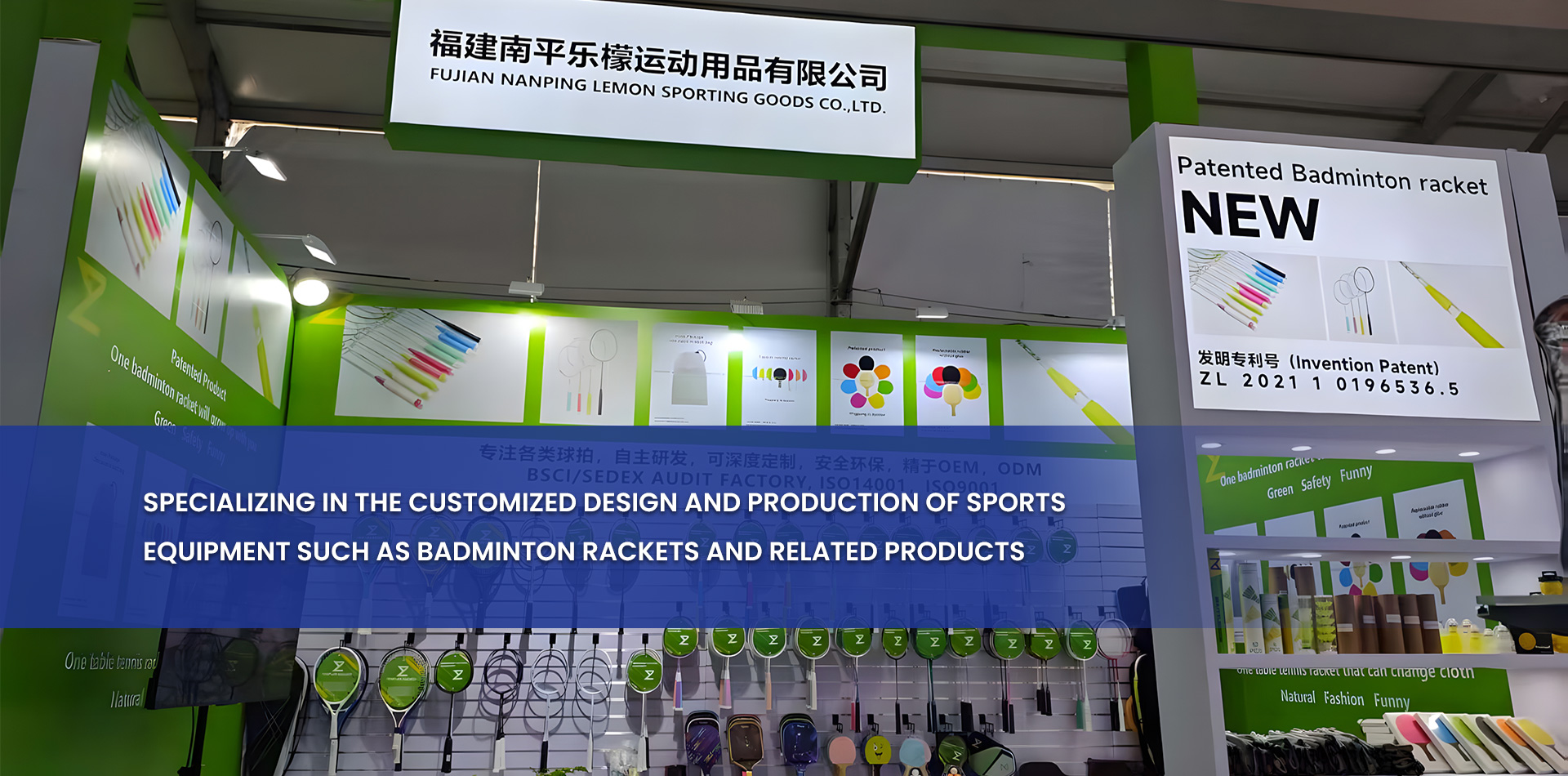
A simple incoming inspection protocol is the buyer's last line of defence. It is inexpensive and catches the majority of problems before they reach customers.
Sample the shipment according to a defined plan (for example, per pallet or per batch).
Measure the key specification parameters and record the results.
Functionally test a representative subset.
Verify labelling, packaging and documentation against the approved artwork.
Document results by batch number and raise trends with the supplier.
Reject or negotiate remedies for any lot that fails the criteria.
Keep the data. A buyer who can show three months of measured results has far more leverage in a quality conversation than one who reports only that a batch felt wrong.
Understanding why quality varies helps buyers ask better questions.
Raw material substitution: lower-grade material used to reduce cost.
Tool wear: moulds and dies degrade and produce out-of-tolerance parts over time.
Process drift: settings change without documentation.
Operator variation: manual steps introduce inconsistency.
Sub-supplier quality: components from third parties may not meet the same standard.
A factory that monitors these factors proactively prevents most defects before they occur.
Put quality terms in the contract, not just in conversation. Specify the standard, the sampling plan, the acceptance criteria, the remedy for non-conformance, and the documentation you expect with each shipment.
This protects both sides. The supplier knows exactly what is expected, and you have a defined basis for discussion if something goes wrong.
Recurring quality management means tracking a small set of metrics rather than reacting to individual complaints.
| Metric | What It Measures | Target | Action If Breached |
|---|---|---|---|
| Defect rate | Share of units failing inspection | < 1% | Investigate root cause with supplier |
| On-time delivery | Shipments meeting the agreed date | > 95% | Review capacity and planning |
| First-pass yield | Units passing without rework | > 98% | Analyse process weak points |
| Warranty claim rate | Field failures under warranty | < 2% | Reassess design and testing |
| Documentation accuracy | Correctness of shipping paperwork | 100% | Tighten release checklist |
Track these monthly and review them with the supplier quarterly. A small set of well-understood metrics beats a large set of ignored reports.
The applicable standards depend on your destination market and product category. These are the ones most commonly requested.
BWF Laws of Badminton: verify the factory can supply the current certificate and that its scope covers your product.
ISO 9001: verify the factory can supply the current certificate and that its scope covers your product.
CE: verify the factory can supply the current certificate and that its scope covers your product.
REACH: verify the factory can supply the current certificate and that its scope covers your product.
BWF approval: request the certificate and confirm validity.
ISO 9001:2015: request the certificate and confirm validity.
CE: request the certificate and confirm validity.
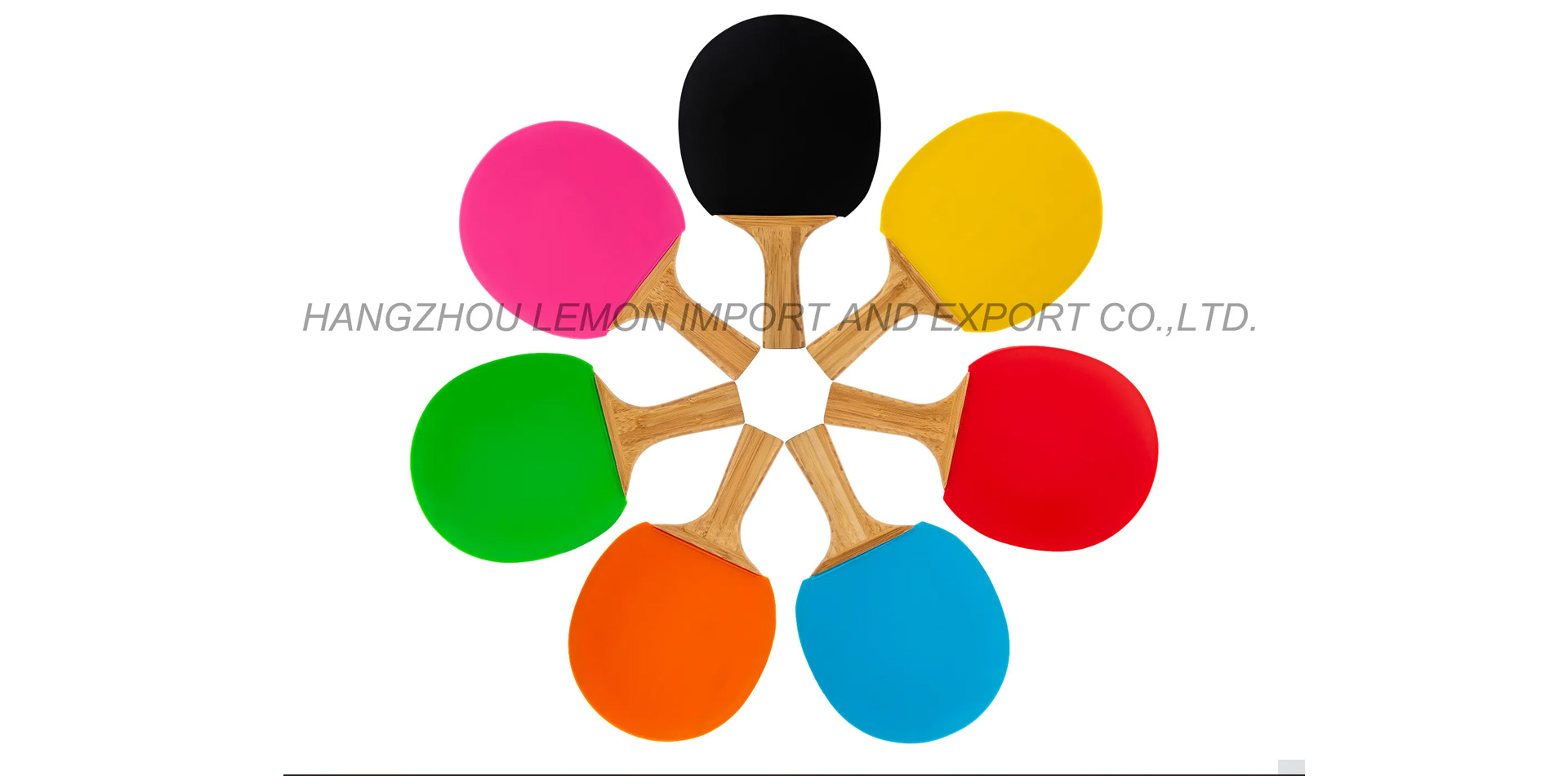
This is the workflow that turns a quality policy into shipped quality.
Approve the specification and the golden sample in writing.
Verify incoming materials against certificates.
Control in-process parameters and record them.
Run functional and safety tests at defined intervals.
Perform 100% or AQL final inspection before packing.
Complete a pre-shipment inspection with photographic records.
Archive the batch documentation for traceability.
Feed field performance back into design and process improvement.
Testing frequency is a negotiation between risk and cost. In badminton and racket sports equipment, professional buyers layer four testing moments, each with a different purpose and owner:
| Testing Moment | Owner | Purpose | Typical Frequency |
|---|---|---|---|
| Incoming material check | Factory QC | Verify raw material matches specification | Every batch, with retained samples |
| In-process control | Factory production | Catch drift before value is added | Continuous or per shift |
| Pre-shipment inspection | Buyer or third party | Verify finished goods against the order | Every order until trust is established; then every 2â3 orders |
| Periodic third-party certification | Accredited laboratory | Validate compliance for the destination market | Annually, or on design/material change |
The most common failure pattern is skipping the third row: buyers rely entirely on factory self-declaration and discover problems at their own warehouse, where remedies are weakest. For the first three orders with any new badminton rackets supplier, third-party pre-shipment inspection is the cheapest insurance available in badminton and racket sports equipment trade.
A certificate confirms compliance with a standard following assessment by an accredited body. A test report records the results of specific tests. Both are useful; the certificate is a higher-level signal, while the report gives detail.
ISO 9001 confirms that a documented quality management system is in place and audited. It makes quality repeatable but does not by itself guarantee a specific product's performance. Combine it with product testing.
Most buyers re-audit annually, or more often if the supplier is new, critical, or has had recent quality issues. Periodic third-party testing complements internal audits.
Document the failure with evidence, notify the supplier formally, and agree a remedy â rework, replacement, credit or return. Track the resolution to confirm the root cause is fixed.
Yes, and it is good practice. Many buyers appoint a third-party inspection company to verify goods before they leave the factory.
It depends on the market: CE for the EU, UL or ETL for North America, and specific standards for food, medical or electrical applications. Confirm the requirement for your destination before ordering.
Check the issuing body's database, confirm the certificate number, scope and validity, and ensure the product in question is covered.
Broadly, yes â but not perfectly. A structured audit and batch testing reveal real quality differences that price alone cannot.
Global demand for badminton and racket sports equipment is shaped by three long-term forces: industrial upgrading in emerging economies, tightening quality and environmental regulation in developed markets, and the reorganisation of supply chains toward suppliers who can demonstrate reliability rather than merely offer low prices. For buyers, this means the bar for acceptable suppliers is rising, and the gap between professional and opportunistic manufacturers is widening.
At the same time, end customers are better informed than ever. They compare specifications, read reviews, and test products in ways that make hidden quality differences visible. A badminton rackets that performs well in a showroom but fails in the field creates a problem that no discount can offset, because the cost is borne by your customer relationship rather than your invoice.
Regulatory tightening: BWF Laws of Badminton, ISO 9001 and similar standards increasingly require documented compliance, not verbal assurance.
Supply chain resilience: buyers now value suppliers who can maintain output through disruptions and hold buffer stock.
Total cost focus: procurement teams increasingly evaluate lifetime cost rather than purchase price.
Digital transparency: online catalogues and reviews expose quality differences quickly.
Customization demand: buyers want products adapted to local voltage, sizing, language and packaging.
In this environment, the supplier you choose becomes part of your product strategy. A manufacturer that invests in testing, documentation and service protects your reputation; one that cuts corners transfers risk to you.
An inspection plan defines what is checked, how often, by whom, and what happens when something fails. Without it, inspection becomes an inconsistent reaction to problems rather than a preventive routine.
| Stage | What Is Checked | Frequency | Responsible |
|---|---|---|---|
| Incoming material | Certificates, grade, dimensions | Every batch | QC / warehouse |
| First article | Full dimensional and functional check | New product or change | QC engineer |
| In-process | Critical parameters and dimensions | Per shift or lot | Production / QC |
| Final inspection | Appearance, function, packing | Every lot | QC inspector |
| Pre-shipment | Quantity, quality, packaging, documents | Every order | QC / third party |
The most valuable inspection is preventive. Catching a deviation during production costs a fraction of catching it after the goods have been packed and shipped, and it prevents the same defect from recurring in future orders.

When a defect appears, the professional response is to find the root cause rather than to sort the symptom. Techniques such as the five-why method and fishbone analysis help trace a problem back to its source.
A simple discipline works well: describe the problem precisely, identify the immediate cause, ask why repeatedly until a systemic cause emerges, implement a corrective action, then verify that the action actually prevented recurrence. Over time this transforms quality from inspection to prevention.
Traceability means being able to connect a finished product back to its batch, its materials and its inspection records. For regulated markets it is often mandatory, and for all markets it is valuable during a dispute.
Batch numbering: every production lot should have a unique identifier.
Material traceability: certificates linking raw materials to batches.
Inspection records: measured results, not just pass/fail marks.
Change logs: a record of any process or material change, with approval.
Retention: records kept for the period required by your market or your contract.
When engineers and procurement teams specify badminton rackets, they evaluate a consistent set of technical criteria. Understanding these criteria lets you write a precise requirement and compare suppliers fairly.
| Criterion | Why It Matters | What to Ask |
|---|---|---|
| Capacity or rating | Determines whether the product suits the application | Rated output under stated conditions |
| Material and construction | Drives durability and compliance | Material grade and certificates |
| Tolerance and precision | Affects fit, function and life | Dimensional tolerances and test method |
| Efficiency | Affects operating cost | Efficiency figures and test conditions |
| Serviceability | Determines downtime and cost | Access, spare parts, maintenance interval |
| Compliance | Required for market access | Certification scope and validity |
Request that suppliers quote against each criterion explicitly, rather than providing a generic brochure. A supplier who can address the criteria in detail is demonstrating genuine engineering capability.

Material choice is often the single most important decision in specification, because it determines strength, corrosion resistance, weight and cost. The right answer depends on the application, not on a universal 'best' material.
| Material Consideration | Influences | Typical Trade-off |
|---|---|---|
| Strength and stiffness | Load capacity and deformation | Higher strength may reduce ductility |
| Corrosion resistance | Service life in aggressive environments | Higher alloy content raises cost |
| Temperature resistance | Performance in hot or cold conditions | Specialty materials cost more |
| Weight | Handling and transport cost | Lighter materials may be weaker |
| Fabrication | Ease of forming and joining | Some materials are harder to process |
| Cost | Purchase price | Cheaper material may shorten life |
Discuss the operating environment with the supplier so material recommendations are based on real conditions. A grade that performs well in a dry workshop may corrode quickly in a humid plant, and the resulting failure is far more expensive than the difference in material cost.
Good installation and a disciplined maintenance routine extend service life substantially and protect any warranty. The supplier should provide clear documentation for each stage.
Verify the site conditions against the specification before installation.
Follow the manufacturer's mounting and connection instructions exactly.
Check alignment, fastening torque and clearances before commissioning.
Confirm electrical or process connections match the local supply.
Record installation details and any deviations for future reference.
Operate within the rated capacity and conditions stated in the manual.
Monitor performance indicators to detect drift early.
Train operators on correct use and on recognising abnormal behaviour.
Maintain a log of operating hours and any incidents.
Never override safety devices to maintain output.
| Interval | Task | Purpose |
|---|---|---|
| Daily | Visual inspection and monitoring | Detect anomalies early |
| Weekly | Check fastenings, lubrication, controls | Prevent wear and looseness |
| Monthly | Measure key parameters | Track performance drift |
| Quarterly | Inspect wear parts and replace as needed | Avoid unexpected failure |
| Annually | Full service and calibration | Restore optimal performance |
A modest preventive maintenance programme costs far less than unplanned downtime. The most common cause of premature failure is simply the absence of routine attention.
Documentation completeness: missing BWF approval paperwork can delay clearance.
Spare parts strategy: critical spares should be identified and stocked before commissioning.
Training requirement: operators who understand the product make fewer costly mistakes.
Warranty scope: understand exactly what is covered and for how long.
Change management: even small design changes should be documented and approved.
Total lead time: include production, inspection, shipping and clearance, not just production.
Seasonal capacity: plan around peak production periods to avoid delays.
Procurement decisions in this category are investments, and they should be evaluated as such. The relevant question is not whether a product costs less today, but whether it delivers more value over its service life.
A higher-quality badminton rackets typically costs somewhat more up front but delivers fewer failures, longer service intervals, lower energy or consumable cost, and greater customer satisfaction. When these benefits are quantified over the expected life, the premium is usually recovered quickly.
| Investment Factor | Low-Cost Option | Quality Option | Long-Term Effect |
|---|---|---|---|
| Purchase price | Lower | Higher | Quality option costs more initially |
| Failure rate | Higher | Lower | Fewer returns and claims |
| Maintenance | Frequent | Infrequent | Lower labour and downtime |
| Service life | Shorter | Longer | Better amortisation |
| Customer impact | Higher complaint risk | Higher satisfaction | Repeat business |
| Total cost | Often higher | Often lower | Quality option usually wins |
The lesson is consistent across industries: the cheapest purchase is rarely the cheapest ownership. Buyers who model total cost make better decisions and build stronger brands.
Service life depends on duty cycle, environment and maintenance. Ask the supplier for an expected life under defined conditions and compare it against your actual operating profile.
Request test reports, sample testing and, for critical orders, third-party verification. Claims without evidence should be treated as aspirations rather than specifications.
Most manufacturers offer customization of capacity, dimensions, materials, controls and branding. Discuss the implications for cost, lead time and minimum order quantity.
At minimum a specification sheet, installation and operation manual, maintenance schedule and applicable compliance documentation. For complex products, request commissioning guidance.
Very important. Timely technical support and spare parts availability determine how quickly a problem can be resolved, which directly affects your customer relationships.

Use this checklist to structure your next procurement cycle. Each item is drawn from the practices that distinguish successful sourcing programmes from ones that repeatedly encounter problems.
Specification written and approved covering application, duty and standards such as BWF Laws of Badminton.
Supplier shortlist evaluated against capability, quality system and references.
Samples tested from at least two production batches.
Certification verified for scope, issuing body and validity.
Commercial terms agreed including price, MOQ, Incoterms and payment.
Inspection plan defined with stages, methods and acceptance criteria.
Logistics arranged with a forwarder and clear delivery terms.
Documentation prepared for customs and market compliance.
Arrival inspection scheduled with a defined record format.
Performance review planned after the first operating period.
Supplier relationships improve fastest when performance is measured and reviewed regularly rather than discussed only when something goes wrong. The metrics below cover the dimensions that matter most.
| Dimension | Metric | Target | Review Frequency |
|---|---|---|---|
| Quality | Defect rate | Under 1% | Monthly |
| Delivery | On-time rate | Over 95% | Monthly |
| Documentation | Accuracy of paperwork | 100% | Per shipment |
| Responsiveness | Reply time to technical queries | Under 24 hours | Quarterly |
| Support | Spare parts lead time | As agreed | Quarterly |
| Commercial | Price stability | Within agreed band | Annually |
Share the results with the supplier. A performance review is most effective when it is a joint exercise aimed at improvement rather than a scorecard used to assign blame.
Every category of procurement carries risk. Naming the risks makes them manageable.
| Risk | Trigger | Impact | Mitigation |
|---|---|---|---|
| Quality failure | Material or process deviation | Returns and reputational damage | Batch testing and inspection |
| Delivery delay | Capacity or logistics disruption | Production stoppage | Buffer stock and lead-time planning |
| Compliance failure | Missing or incorrect certification | Customs rejection | Pre-verify certificates |
| Cost escalation | Freight or material price moves | Margin erosion | Contract terms and hedging |
| Concentration risk | Single supplier dependency | Vulnerability to disruption | Qualify a second supplier |
| Documentation error | Manual paperwork mistakes | Clearance delays | Checklists and digital records |
Mitigation does not have to be elaborate. The majority of risk in this category is removed by a specification, two qualified suppliers, batch testing and complete documentation.
The value of badminton and racket sports equipment is realised over years of operation, not at the moment of purchase. Buyers who evaluate suppliers on that basis make decisions that look conservative in the short term and prove wise over time.
Three factors drive long-term value: consistency, durability and support. Consistency means every shipment meets the specification. Durability means the product performs for the expected life under real conditions. Support means problems are resolved quickly and spares are available.
A supplier that delivers all three becomes a genuine commercial advantage. æå·ä¹æª¬è¿åºå£æéå ¬å¸ aims to be that kind of supplier, and invites buyers to evaluate us on exactly these terms.
If you want to see how quality is controlled in practice, æå·ä¹æª¬è¿åºå£æéå ¬å¸ (www.factoryracket.com) is happy to share inspection records, test reports and certification for our badminton and racket sports equipment. Visit www.factoryracket.com to learn more and request documentation for your market.
Этот веб-сайт использует файлы cookie, чтобы обеспечить вам максимально эффективное использование нашего веб-сайта.


 English
 Español
 Français
 日本語
日本語 한국어
한국어 العربية
 हिन्दी
 Tiếng Việt
 中文
中文



 телефон
Комментарий
(0)